Same Day Service Available | No Obligation Instant Quote
Arizona's Ant Control Experts
Same Day Service Available
No Obligation Instant Quote
If you've grabbed a can of ant spray and watched those ants disappear - only to come
back two days later with more friends - you've already discovered the main problem with
DIY ant control. You're not solving the infestation. You're just moving it around.
Our technicians cover the Phoenix metro from Goodyear to Apache Junction, and ants are
one of the most common calls we get. Fire ants building mounds in the backyard.
Carpenter ants chewing through a window frame. Tiny rover ants swarming the kitchen at
2am. Each one takes a different approach to actually eliminate - not just scatter.
The secret to ant control isn't killing the ants you see. It's eliminating the colony
you don't.
Same Day Service Available
No Obligation Instant Quote
Your Location
Know the Species
Ant Species in Arizona
Arizona hosts more ant species than most states, and proper identification changes
everything about how we treat them.
Fire Ants
Fire ants build the dome-shaped mounds you see scattered through lawns and desert
landscaping. They're aggressive, attack in groups, and each sting leaves a raised,
burning welt. Fire ant stings can trigger life-threatening allergic reactions in
sensitive individuals. If anyone in your household has known insect allergies, fire
ant mounds near the home are a genuine medical concern.
Harvester Ants
These large red ants create distinctive bare, sandy patches around their mound
entrances where they strip vegetation clean. They're less aggressive than fire ants
but will sting when their colony is disturbed. Harvester mounds are common in yards
backing up to desert areas.
Carpenter Ants
Carpenter ants are the big black ants you sometimes find near door frames, window
sills, or wood fascia. They don't eat wood - they excavate it, hollowing out
galleries to build their nests. The telltale sign is small piles of sawdust-like
debris called frass. Left alone long enough, carpenter ants cause real structural
damage.
Rover Ants
Rover ants are nearly invisible individually - barely a speck - but they travel in
massive numbers. Millions of them can occupy a single colony. They're drawn to sweet
substances and moisture, which is why you typically find them streaming across
kitchen counters and bathroom sinks.
Odorous House Ants
Crush one and you'll immediately understand the name - they smell like rotten
coconut. These small brown ants trail along baseboards and counters, and they're
particularly stubborn to eliminate because a single colony can have multiple queens.
Kill one queen and the others keep the colony going.
Pharaoh Ants
Tiny and yellow, pharaoh ants are one of the most difficult species to control.
What makes them especially tricky: when they feel threatened, they "bud" - splitting
into multiple satellite colonies. Hit them with a repellent spray and you might turn
one infestation into five.
Why DIY Fails
Why Store-Bought Sprays Don't Work
There are four reasons DIY ant spray reliably fails, and understanding them explains why
professional treatment gets results.
You're only killing scouts. The ants you see on your kitchen counter
represent maybe 5% of the colony. The other 95% - including the queen - are hidden
somewhere you'd never spray.
Sprays repel rather than kill. Most over-the-counter products leave a
chemical barrier that ants simply reroute around. They find a new entry point and keep
coming.
Some species split when threatened. Pharaoh ants and Argentine ants
respond to pesticide exposure by budding. Spray them and one colony becomes several,
each spreading to a new area of your home.
The queen keeps laying eggs. A queen ant can produce thousands of
eggs. Kill a hundred foraging workers and she replaces them within days. The only way
to collapse a colony is to get the bait back to the queen.
Professional treatment uses baits that foraging ants carry back to the nest themselves.
The colony collapses from the inside out - usually over one to two weeks.
When to Call Us
Signs of an Ant Problem
Ant trails - Lines of ants moving along baseboards, counters, or
exterior walls aren't random. Ants lay pheromone trails that act like highways. Once
a trail is established, more ants will follow it.
Ants in food areas - Finding ants in your pantry, around pet food
dishes, or on kitchen surfaces is the most common trigger for calling us.
Mounds in your yard - Fire ant and harvester ant mounds visible in
your lawn or landscaping are worth treating before someone discovers them the hard way.
Mounds near play areas or pet runs need immediate attention.
Sawdust piles - Small piles of fibrous, sawdust-like material near
door frames, windowsills, or wood eaves may indicate carpenter ant activity.
Winged ants indoors - Seeing reproductive ants (swarmers) inside
your home signals a mature colony nearby. This is a reliable sign you've got an
established infestation, not just strays.
How We Work
How We Treat Ants - The Lunar Lock Protocol
01
Species Identification
Different ants require completely different treatments. A bait that works perfectly
on odorous house ants may be ignored by fire ants. Our technician identifies the
species before opening a single product - that identification drives every decision
that follows.
02
Baiting for Colony Elimination
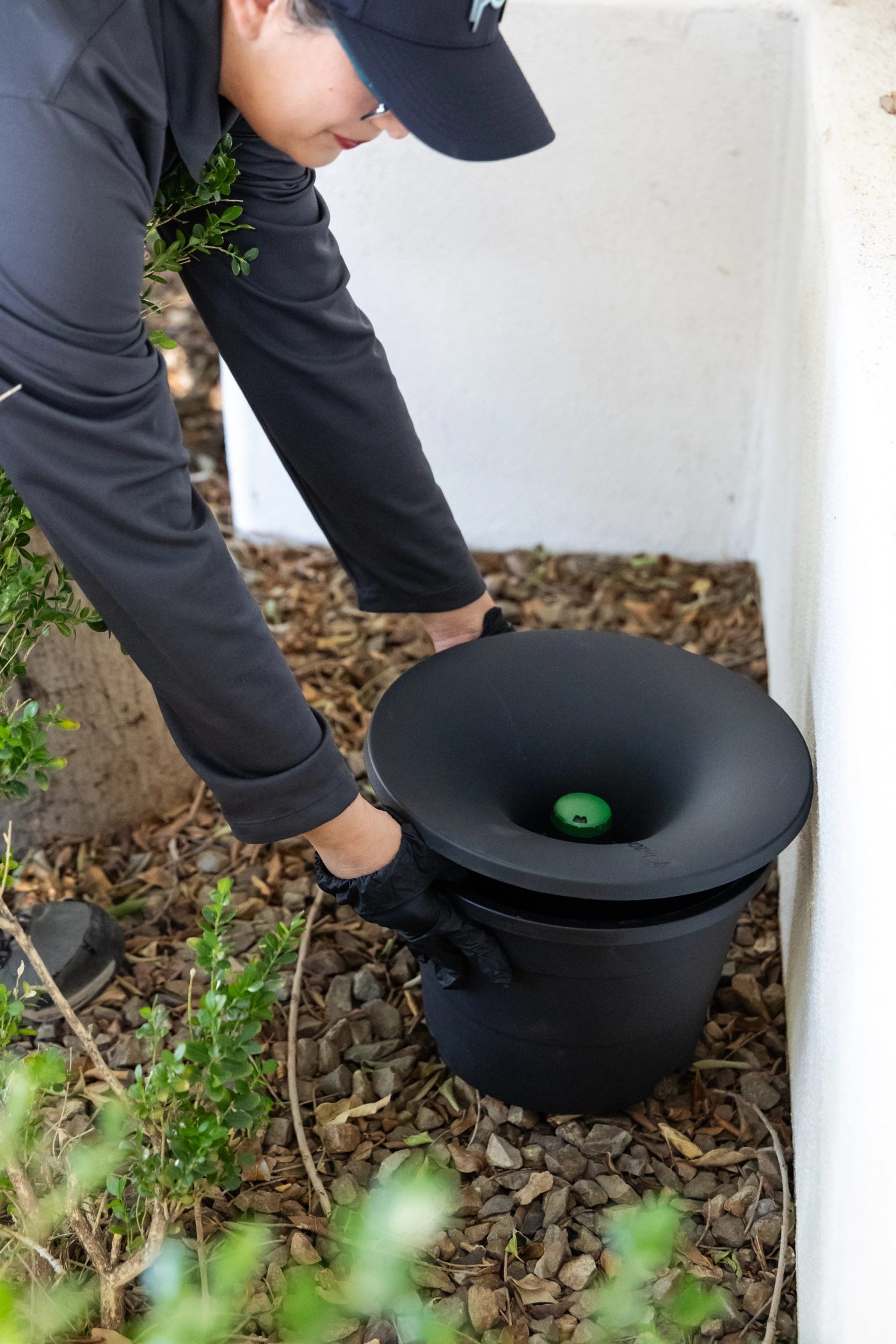
We place professional-grade baits that foraging ants carry back to the colony
themselves. The active ingredients spread through feeding and social grooming,
eventually reaching the queen. The colony typically collapses within one to two
weeks. It's slower than a spray, but it actually solves the problem.
03
Perimeter and Interior Treatment
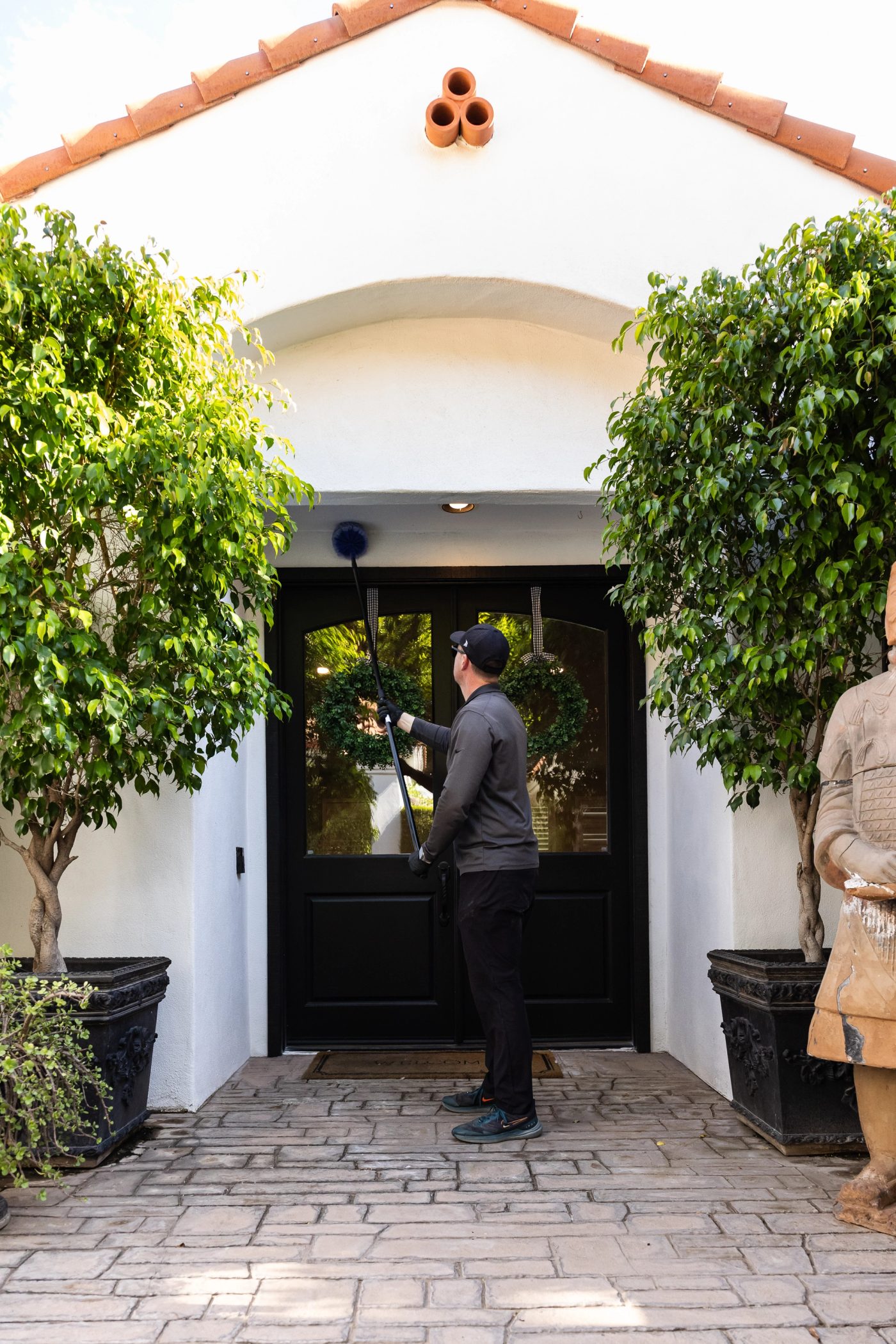
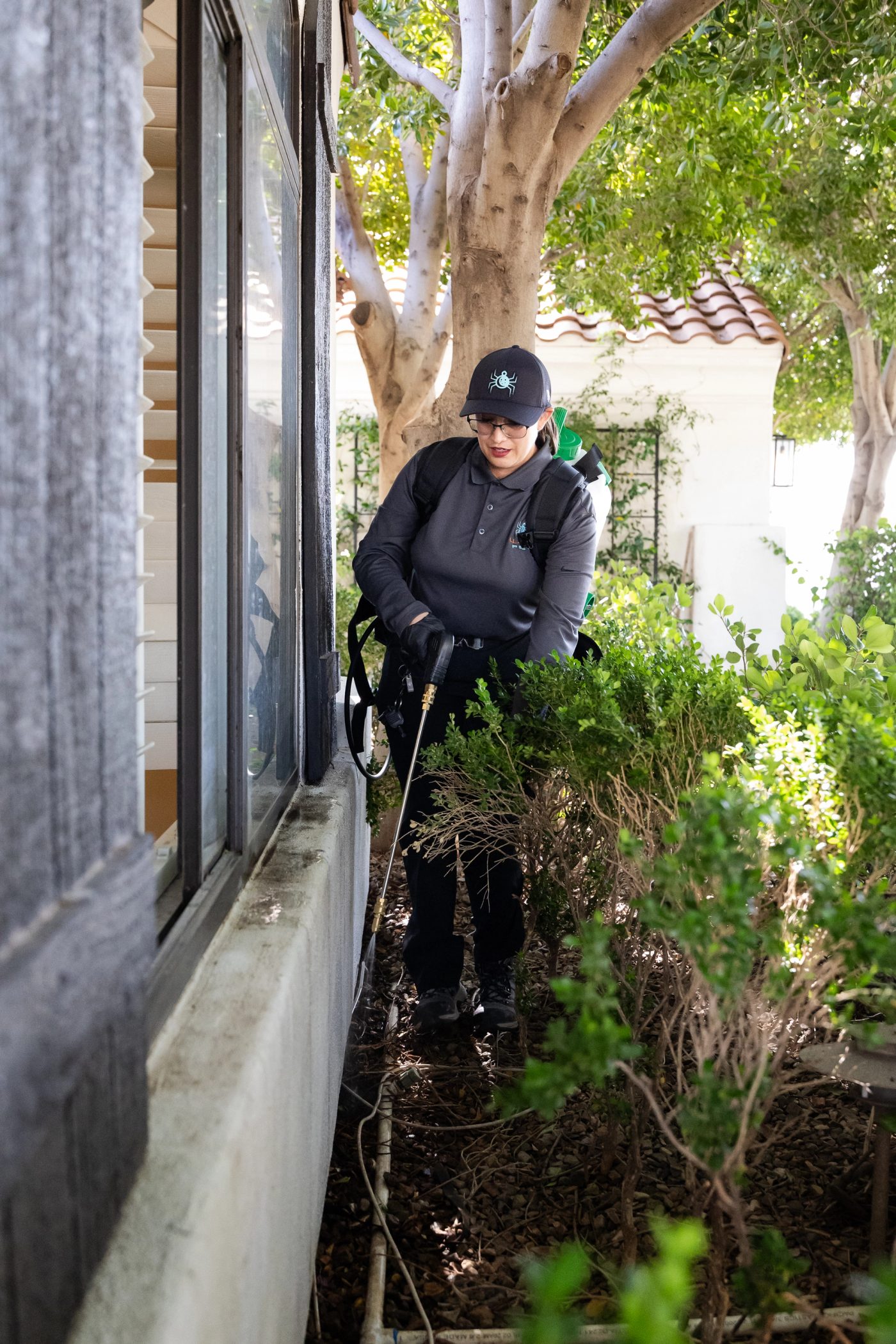
We apply residual products around the exterior foundation to intercept ants
approaching the structure. Interior treatments target established trails, active
entry points, and any areas where ants are congregating. Outdoor mounds get direct
treatment to prevent reinfestation from adjacent colonies.
04
Follow-Up and Monitoring
Some ant species - particularly those with multiple queens or large outdoor
colonies - take time to fully eliminate. We monitor results and retreat as needed
until the problem is resolved. You shouldn't have to keep calling us for the same
infestation.
Health & Safety
Health Concerns From Ants
Fire ant stings cause immediate, intense burning pain followed by a
raised pustule. Multiple stings are common because fire ants swarm when their mound is
disturbed. For people with sting allergies, a fire ant encounter can require emergency
medical care.
Food contamination is a real risk most people don't think about. Ants
crawl through drains, garbage, and outdoor debris before walking across your cutting
board or into your pantry. They can transfer bacteria like Salmonella to food surfaces.
Pet safety deserves attention if you have small dogs or cats. Fire ants
will attack animals that get near their mounds, and a small pet that disturbs a large
mound can receive a dangerous number of stings before you can intervene.
The ant-scorpion connection: Ants are a primary food source for
scorpions. A yard with heavy ant activity creates exactly the kind of feeding ground
that draws scorpions in. Many customers who call us for ants notice fewer scorpions in
the weeks after we treat - not a coincidence.
Prevention Tips
Preventing Ant Problems
A few habits significantly reduce your chances of an infestation returning after treatment.
Clean up food sources. Wipe down counters after cooking, sweep floors,
and clean up spills before they dry. Keep pantry items in sealed containers - cardboard
boxes and open bags are easy for ants to access. Don't leave pet food out overnight.
Fix moisture problems. Many ant species are drawn to water as much as
food. Leaky pipes under sinks, dripping faucets, and AC condensate lines create ideal
conditions.
Seal entry points. Ants can squeeze through gaps that look like
nothing to us. Caulk around window frames, door thresholds, and utility penetrations.
Trim vegetation away from the house. Branches and shrubs touching
your exterior walls give ants a direct path inside, bypassing any ground-level
barriers.
Move firewood away from the building. Stacked firewood is a prime ant
habitat. Keep it at least 20 feet from your home and elevated off the ground.
The best pest control I've ever used. Very responsive.
A
Alejandro Martinez
Great weed and pest control. Will use again!
C
Chandler Air Service
Reliable, professional, and reasonably priced.
T
Tom Bridenback
No more scorpions. The owner is very responsive.
L
Linda Voss
Fast and friendly! Haven't seen a bug since.
J
Jacob P.
Prompt, professional, and very affordable.
D
Dana Chen
Top-notch service! Explained everything clearly and made sure I was comfortable with the treatment before starting.
M
Marcus Weller
They showed up on time, answered all my questions, and were very respectful of our home.
E
Emily Starks
Very impressed. The technician was courteous, wore shoe covers, and treated every area we discussed.
B
Ben & Sarah K.
Great experience from start to finish. Booking was easy and the follow-up was appreciated.
J
Julie Kaye
They got rid of our ants in one visit! Super impressed with how fast they worked.
R
Ralph D.
Finally, someone who knows how to handle scorpions. We've tried two other companies—Lunar is the only one that worked.
N
Natalie Frey
Quick and professional. Will definitely use again.
T
Travis L.
Fair prices and excellent service.
A
Allison Beck
So glad we switched to this company. Night and day difference. They actually follow up, explain the products, and give peace of mind.
G
Greg O.
Our tech was super knowledgeable and polite. He even showed me where the bugs were getting in!
M
Megan T.
Very thorough and detailed. Highly recommend.
L
Lori Jensen
Love the customer service and the results!
T
Trevor Mills
Fast service and no more bugs. Thanks!
I
Isabel Harmon
We had a major cricket issue in our backyard, and Lunar had it resolved within a couple visits. Very happy with the outcome!
S
Sam D.
Courteous staff, clear communication, and they didn't try to upsell anything I didn't need. Just honest work.
V
Valerie Nunez
The team at Lunar Pest Control is always on time and incredibly respectful. They listen and take care of what actually needs treating.
R
Reggie Baldwin
Haven't seen a single spider in weeks. That's saying something in Arizona. Highly recommend!
A
Angela Pierce
We've had monthly service for a year now. I never have to think about pests anymore—and I used to stress about it constantly
T
Tyrese C.
Their technology makes things easy—I love getting text reminders and updates about what was done after each visit.
W
Whitney Gray
I wasn't sure what to expect, but the technician took time to walk through everything with me and was super thorough.
K
Ken L.
Great service and even better people. Feels like a local company that really cares.
R
Rachel DeVine
Lunar Pest Control went above and beyond. They treated our attic, garage, and yard with zero hassle and explained everything clearly. Very happy we found them!
T
Travis L.
Fair prices and excellent service.
A
Allison Beck
So glad we switched to this company. Night and day difference. They actually follow up, explain the products, and give peace of mind.
G
Greg O.
Our tech was super knowledgeable and polite. He even showed me where the bugs were getting in!
M
Megan T.
Very thorough and detailed. Highly recommend.
L
Lori Jensen
Love the customer service and the results!
T
Trevor Mills
Fast service and no more bugs. Thanks!
I
Isabel Harmon
We had a major cricket issue in our backyard, and Lunar had it resolved within a couple visits. Very happy with the outcome!
S
Sam D.
Courteous staff, clear communication, and they didn't try to upsell anything I didn't need. Just honest work.
V
Valerie Nunez
The team at Lunar Pest Control is always on time and incredibly respectful. They listen and take care of what actually needs treating.
R
Reggie Baldwin
Haven't seen a single spider in weeks. That's saying something in Arizona. Highly recommend!
A
Angela Pierce
We've had monthly service for a year now. I never have to think about pests anymore—and I used to stress about it constantly
T
Tyrese C.
Their technology makes things easy—I love getting text reminders and updates about what was done after each visit.
W
Whitney Gray
I wasn't sure what to expect, but the technician took time to walk through everything with me and was super thorough.
K
Ken L.
Great service and even better people. Feels like a local company that really cares.
R
Rachel DeVine
Lunar Pest Control went above and beyond. They treated our attic, garage, and yard with zero hassle and explained everything clearly. Very happy we found them!
T
Travis L.
Fair prices and excellent service.
A
Allison Beck
So glad we switched to this company. Night and day difference. They actually follow up, explain the products, and give peace of mind.
G
Greg O.
Our tech was super knowledgeable and polite. He even showed me where the bugs were getting in!
M
Megan T.
Very thorough and detailed. Highly recommend.
L
Lori Jensen
Love the customer service and the results!
T
Trevor Mills
Fast service and no more bugs. Thanks!
I
Isabel Harmon
We had a major cricket issue in our backyard, and Lunar had it resolved within a couple visits. Very happy with the outcome!
S
Sam D.
Courteous staff, clear communication, and they didn't try to upsell anything I didn't need. Just honest work.
V
Valerie Nunez
The team at Lunar Pest Control is always on time and incredibly respectful. They listen and take care of what actually needs treating.
R
Reggie Baldwin
Haven't seen a single spider in weeks. That's saying something in Arizona. Highly recommend!
A
Angela Pierce
We've had monthly service for a year now. I never have to think about pests anymore—and I used to stress about it constantly
T
Tyrese C.
Their technology makes things easy—I love getting text reminders and updates about what was done after each visit.
W
Whitney Gray
I wasn't sure what to expect, but the technician took time to walk through everything with me and was super thorough.
K
Ken L.
Great service and even better people. Feels like a local company that really cares.
R
Rachel DeVine
Lunar Pest Control went above and beyond. They treated our attic, garage, and yard with zero hassle and explained everything clearly. Very happy we found them!
Frequently Asked Questions
How long does ant treatment take to work?
You'll usually see reduced activity within a few days. Complete colony elimination
typically takes two to four weeks - baits work by spreading through the colony, so
they're slower than contact sprays. But they actually collapse the colony rather than
just scattering it. If you see more ants immediately after treatment, that's normal
and temporary (see the next question).
Why are there more ants after you treated?
This happens with bait treatments and it's a sign the treatment is working. Ants find
the bait and recruit more foragers to bring it back to the colony. You'll see increased
activity for a few days, then a sharp drop as the queen and reproductives die. It's the
opposite of what sprays do - instead of scattering ants immediately, baits pull them in
before eliminating them at the source.
Are ant treatments safe for pets and children?
Yes. We use products approved for residential use and apply them according to label
directions. Baits are placed in areas that are accessible to ants but not to pets and
children. We'll walk you through any prep needed before treatment and give you specific
guidance for your household.
How do I know what kind of ants I have?
Size, color, location, and behavior are the main clues. Small dark ants trailing along
your kitchen counter are likely odorous house ants. Large black ants near wood or
exterior eaves point to carpenter ants. Red ants building dome-shaped mounds are
usually fire ants or harvesters. Our technicians can make a definitive identification
during inspection - it matters for choosing the right treatment.
Will treating outdoor colonies stop ants from coming inside?
Treating outdoor colonies reduces the population pressure on your home. Combining that
with perimeter treatment around the foundation gives you a layered defense - fewer ants
trying to get in, and a barrier that kills those that do. Addressing only the interior
without treating outside rarely gives lasting results.
Same Day Service Available
Eliminate the Colony, Not Just the Trail
Same-day service available across 26 cities in the Phoenix metro. Call or text us for a
no-obligation quote today.