Same Day Service Available | No Obligation Instant Quote
Flea Treatment in Arizona
Same Day Service Available
No Obligation Instant Quote

Fleas are one of the most frustrating pest problems because the part you can see - the fleas jumping on your pet - is only about 5% of the infestation. The other 95% is eggs, larvae, and pupae hiding in your carpet, furniture, and floor cracks, waiting to hatch. Treating the pet helps, but it doesn't solve the problem in your home. That's the part that requires professional treatment to actually clear.
Same Day Service Available
No Obligation Instant Quote
Your Location
Understanding the Problem
The Flea Life Cycle
Flea treatments fail when they only target adult fleas. Getting ahead of the problem means understanding how fleas develop and why some life stages are much harder to kill than others.
- Eggs - A single female flea lays 40 to 50 eggs per day on your pet. Those eggs don't stick; they fall off into carpet fibers, upholstery, and cracks throughout your home.
- Larvae - When eggs hatch, tiny larvae burrow deep into carpet fibers and under furniture, feeding on organic debris and flea droppings.
- Pupae - The cocoon stage is where flea control gets difficult. The protective casing makes pupae nearly impervious to insecticides. They can remain dormant for months, waiting for heat, vibration, or carbon dioxide to trigger emergence.
- Adults - Once they emerge, adult fleas find a host within seconds, begin feeding, and start laying eggs within 24 to 48 hours. The cycle starts over.
Health Risks
Health Risks Fleas Carry
- Flea Allergy Dermatitis - Many dogs and cats are allergic to flea saliva. Even a few bites trigger intense itching, inflammation, hair loss, and open sores.
- Tapeworms - Fleas carry tapeworm larvae. When a pet grooms itself and accidentally swallows an infected flea, the tapeworm takes up residence in the digestive tract. Children can be infected the same way.
- Anemia - A severe infestation can drain enough blood from puppies, kittens, and small animals to cause serious health problems.
- Plague and Murine Typhus - Arizona sees documented plague cases every year, primarily in rural areas through fleas on rodents. Murine typhus, transmitted the same way, causes fever, headache, and rash.

Our Process
How Flea Treatment Works
Inspection and Assessment - We identify where fleas are concentrating: pet sleeping areas, favorite furniture, heavily carpeted rooms, shaded outdoor spots where pets rest.
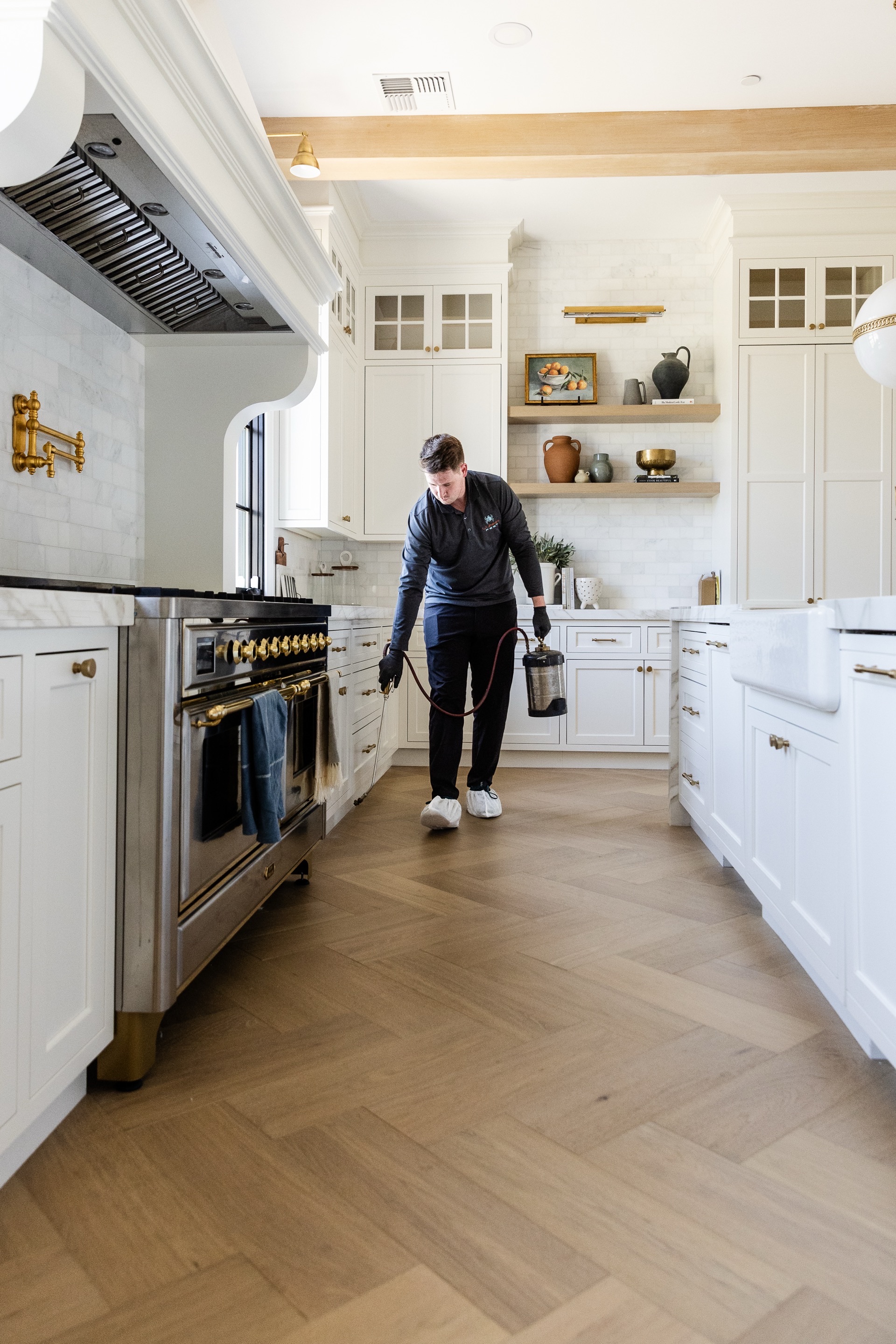
Interior Treatment - A combination of adulticide and insect growth regulator (IGR) products gets applied to carpets, upholstery, and cracks. The adulticide kills current adults; the IGR disrupts flea development so larvae can't mature into reproducing adults.
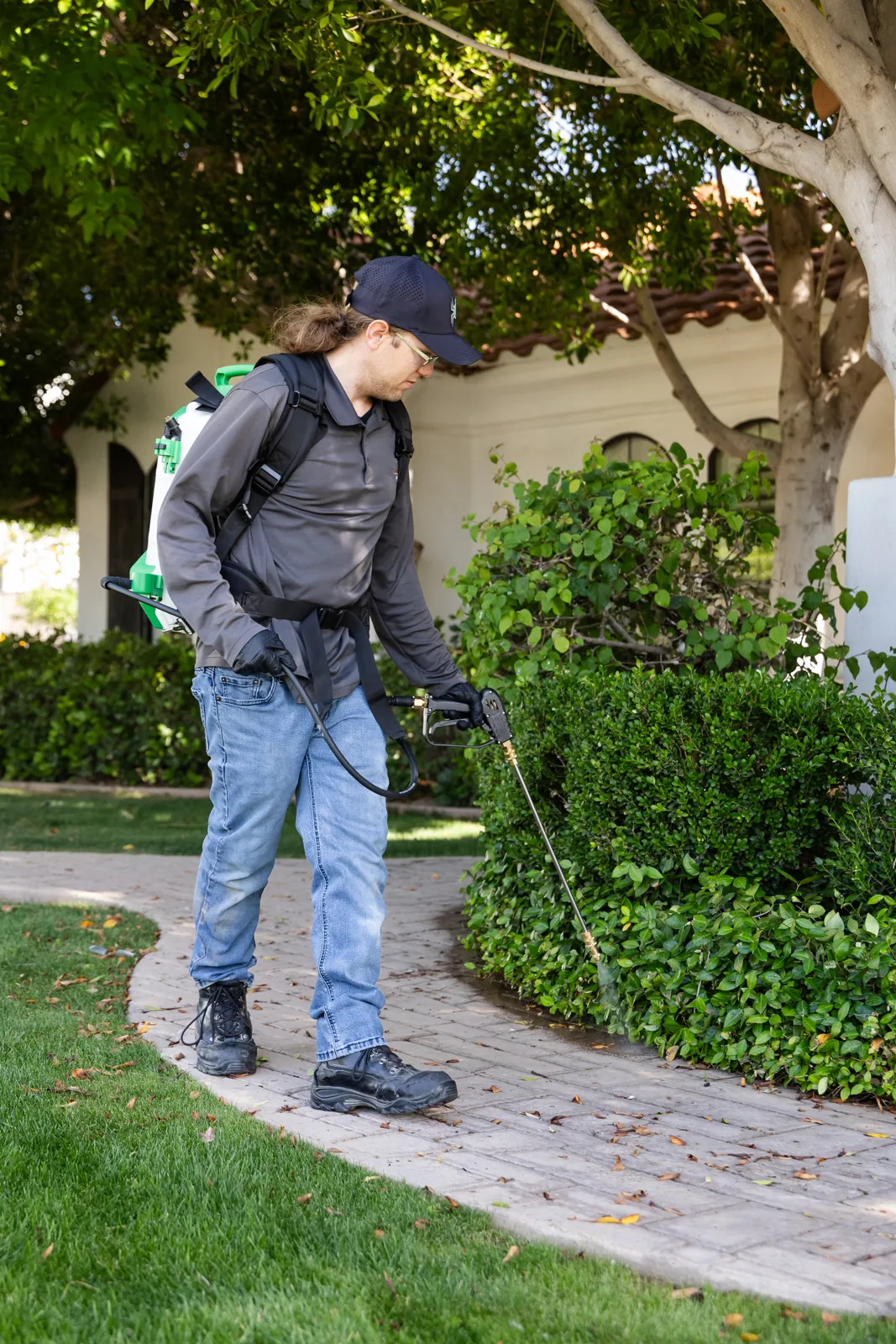
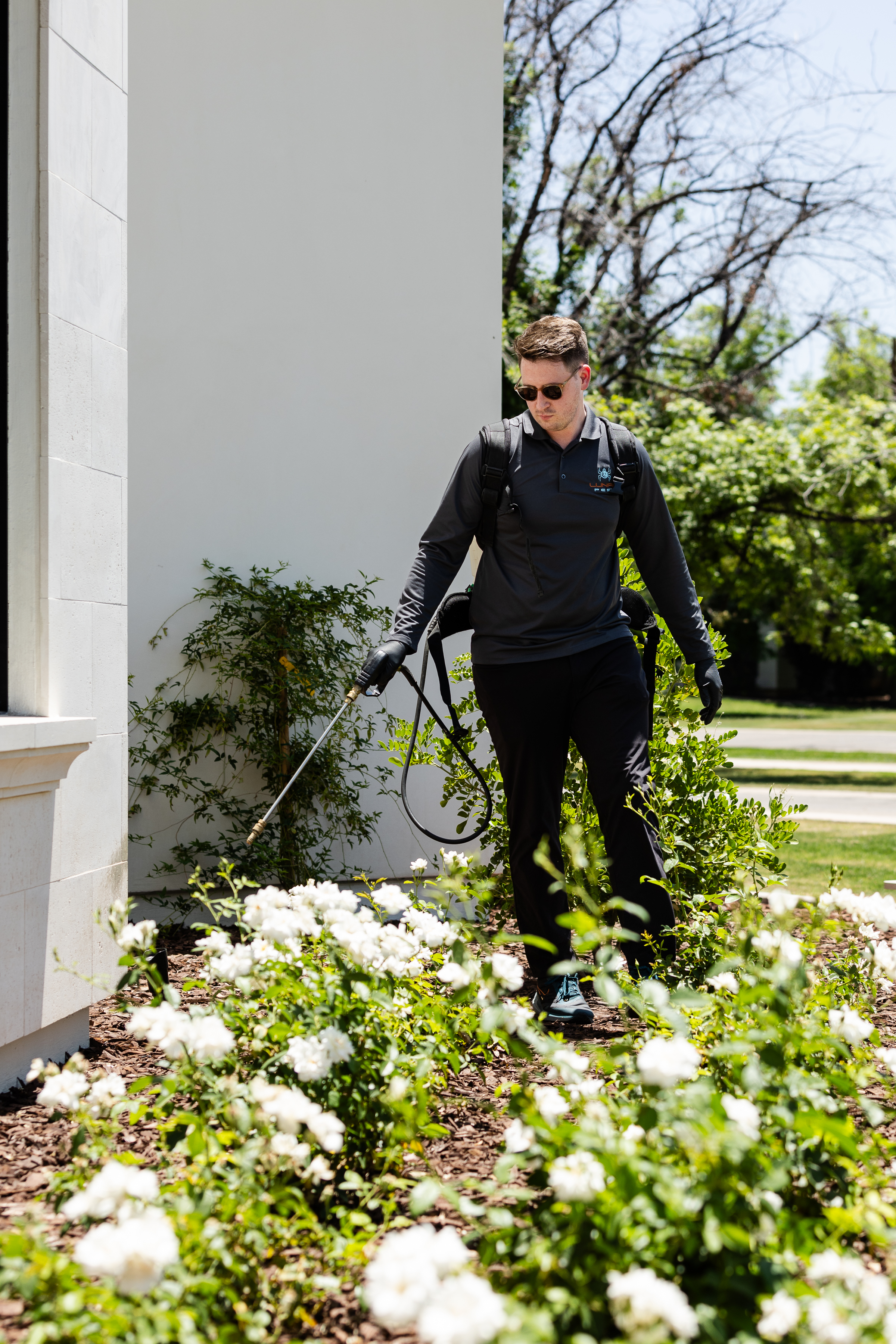
Exterior Treatment - Shaded areas under decks, along fence lines, under shrubs, and pet run areas get treated. Outdoor populations keep feeding the indoor problem if left untreated.
Follow-up Treatment - Because pupae survive initial treatment inside their cocoons, a second treatment is almost always needed. We space follow-ups 2 to 3 weeks apart to catch the next wave of emerging adults before they can lay eggs.
Same Day Service Available
No Obligation Instant Quote
What Our Customers Say
Trusted Across the Phoenix Valley
Frequently Asked Questions
Adult flea populations drop significantly within 24 to 48 hours of the first treatment. You'll still see some flea activity for 2 to 4 weeks as pupae continue to emerge from cocoons and contact treated surfaces. That's the process working - not treatment failure. With two treatments spaced appropriately, most flea problems are fully resolved within 3 to 4 weeks.
Yes, for 2 to 4 hours while products dry. Once surfaces are dry, the treated areas are safe for people and pets. We'll walk you through specific timing based on the products used in your home.
Pupae. The cocoon stage survives treatment and continues producing adults for weeks. Those adults emerge, contact the residual product on treated surfaces, and die - but you'll still see them moving around briefly before that happens. If activity hasn't decreased after 3 weeks, a follow-up treatment is needed.
Products available at hardware and pet stores rarely eliminate an established infestation. They don't penetrate deep into carpet fibers where larvae hide, and they don't contain the growth regulators that break the reproductive cycle. Most people who try the DIY route end up spending more over several weeks than they would have on professional treatment, without getting ahead of the problem.
It happens more than you'd think. Fleas can ride in on your clothing or shoes, especially if you've been around other animals or in areas where wildlife is active. Rodents or wildlife accessing the home through gaps can introduce them. Some cats pick them up at vet offices or during boarding. Indoor-only status doesn't guarantee a flea-free environment.
Same Day Service Available
No Obligation Instant Quote
Your Location