Same Day Service Available | No Obligation Instant Quote
Cockroach Treatment in Arizona
Same Day Service Available
No Obligation Instant Quote

Nobody wants to see a cockroach in their kitchen. But in Arizona, it happens - a lot. Our warm climate, irrigated landscaping, and aging sewer infrastructure create ideal conditions for roaches year-round. This isn't a reflection of how clean your home is. It's just the reality of living in the desert Southwest.
Our technicians handle cockroach calls across the Valley every week, from Tempe to North Phoenix. German cockroaches in kitchen cabinets. American cockroaches coming up through floor drains after monsoon storms. Turkestan roaches pouring out of irrigation boxes along the block wall. Each species lives differently, spreads differently, and needs a different approach to eliminate.
The good news: cockroaches are very treatable. The key is matching the treatment to the species.
Same Day Service Available
No Obligation Instant Quote
Your Location
Know Your Enemy
Cockroach Species in Arizona
Identifying the species is the first thing we do on every cockroach call. The treatment that wipes out German roaches in a kitchen will do almost nothing for American roaches coming in through the drains - and vice versa.
German Cockroaches are the ones you really don't want. They're small - about half an inch - light brown with two dark stripes behind their head, and they live exclusively indoors. A single female produces an egg case holding 30 to 50 eggs. Those eggs hatch in about a month, and the nymphs reach reproductive maturity in roughly 60 days.
American Cockroaches are the big ones - sometimes over two inches long, reddish-brown, with a distinctive yellowish figure-eight pattern on their head. They live in drains, sewer lines, irrigation boxes, and damp basements.
Turkestan Cockroaches have become increasingly common across the Phoenix metro. The males are tan-brown and fly. They colonize irrigation boxes, block wall cracks, and landscape areas.
Brown-Banded Cockroaches prefer drier areas and hide in furniture, closets, behind picture frames, and inside electronics. Their spread-out distribution means treatments need to cover more of the structure.

Early Detection
Signs of a Cockroach Problem
Cockroaches are nocturnal and good at staying hidden. By the time you're seeing them regularly, especially during daylight hours, the population is usually larger than it looks.
- Live roaches at night. Flip on a kitchen light unexpectedly and watch cockroaches scatter - that's the clearest sign you have an active infestation. Even seeing one roach means more are hiding somewhere.
- Droppings. German roach droppings look like specks of black pepper and appear in cabinet corners, inside drawers, and along baseboards near their hiding spots.
- Egg cases. German cockroaches produce brown, purse-shaped egg cases called oothecae - about a quarter inch long. Finding these in cabinets or under appliances means you have an active breeding population.
- Musty odor. Heavy cockroach infestations produce a distinctive oily, musty smell.
- Shed skins. Cockroaches molt as they grow, leaving translucent, hollow shells behind.

Health & Safety
Health Risks from Cockroaches
The American Lung Association recognizes cockroach allergens as indoor air pollutants - not a distinction most people know about, but an important one.
- Asthma and allergies. Cockroach droppings, shed skins, and body parts become airborne allergens as they break down. Research shows cockroach allergens are a significant trigger for asthma attacks, particularly in children.
- Disease transmission. Cockroaches travel through sewers, drains, and garbage before walking across your cutting board. They can carry Salmonella, E. coli, and other bacteria.
- Food contamination. Beyond bacteria, roaches leave droppings and regurgitate digestive fluids on stored food.
If anyone in your household has asthma, respiratory allergies, or a compromised immune system, cockroach control isn't just a comfort issue - it's a health priority.
Our Process
How We Treat Cockroaches - The Lunar Lock Protocol
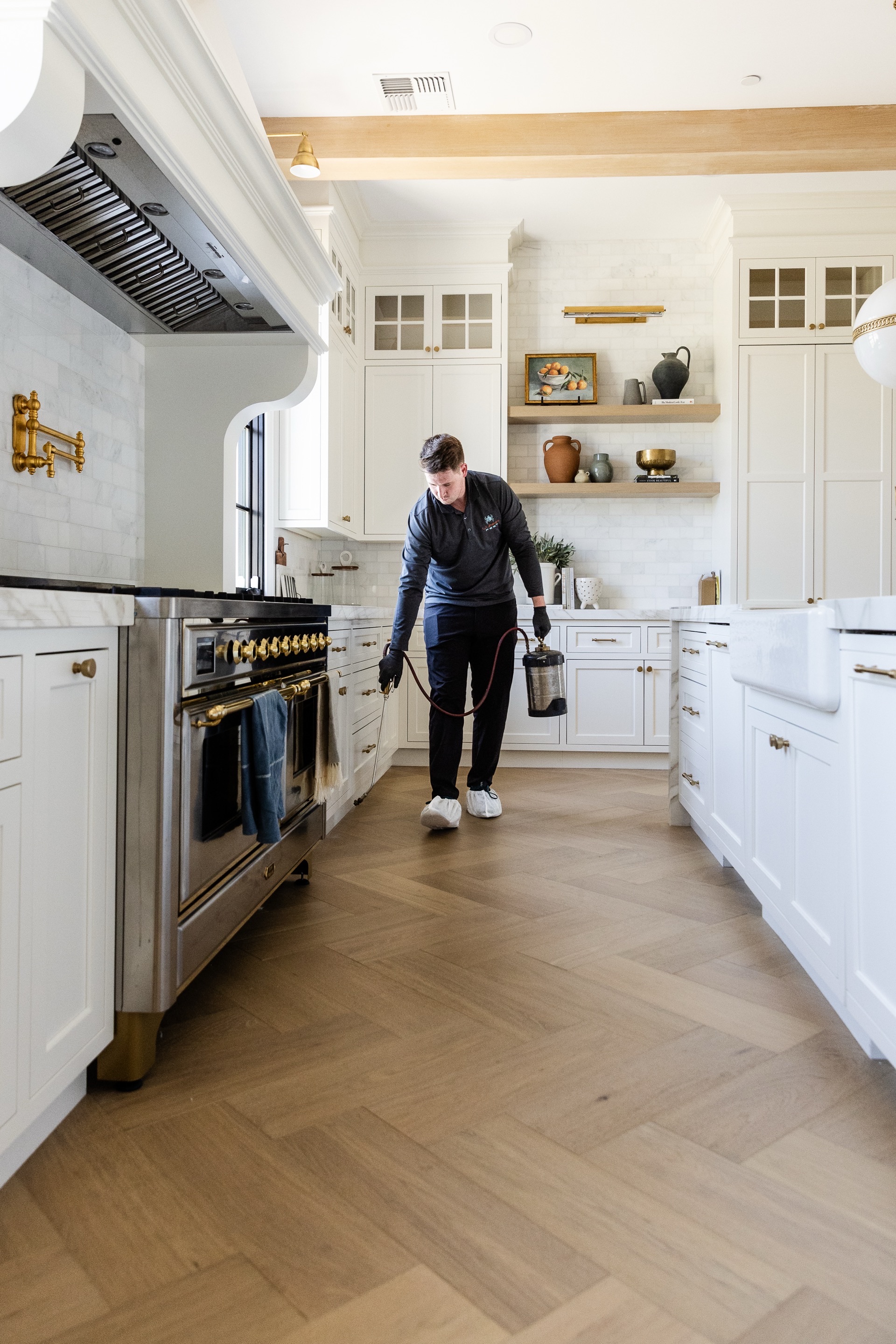
Step 1: Identification and Inspection. Every cockroach treatment starts with identification. German roaches hiding in kitchen cabinets require completely different treatment than American roaches entering through floor drains. Our technician inspects cabinets, appliance interiors, baseboards, and potential entry points.
Step 2: Targeted Bait Application. For German cockroaches, we use professional-grade gel baits applied in cracks, crevice areas, and harborage sites - places roaches actually live, not just surfaces they cross. Baits work because roaches eat them and return to the colony where other roaches feed on their droppings and on dead bodies.
Step 3: Insect Growth Regulators. We apply insect growth regulators (IGRs) alongside bait treatments. IGRs prevent nymphs from maturing into reproductive adults, breaking the breeding cycle.
Step 4: Follow-Up Treatments. German cockroach infestations typically require two to three treatments over four to six weeks. Eggs continue hatching after the initial visit, and follow-up treatments target newly emerged nymphs before they reach reproductive age.

Same Day Service Available
No Obligation Instant Quote
What Our Customers Say
Trusted Across the Phoenix Valley
Frequently Asked Questions
You should see a reduction in roach activity within the first week. Complete elimination of German cockroaches typically takes four to six weeks because eggs continue hatching after treatment. We schedule follow-up visits to treat newly hatched nymphs before they reproduce. If you're still seeing significant activity after a follow-up, tell us - we'll adjust the approach.
Cost depends on the species, how severe the infestation is, and the size of the space being treated. We provide free inspections and written estimates before any work begins. For a typical German cockroach situation in a kitchen, treatments generally start in the $150 to $300 range. Ongoing exterior treatment for outdoor species is included in our regular pest control service.
Yes. We use targeted application methods that place products inside cracks, crevices, and hidden areas where cockroaches harbor - not on open surfaces where pets and children contact them. We'll give you specific preparation instructions before treatment and let you know if there's anything you need to do to prepare the space.
German cockroaches hitchhike in - they arrive in packaging and used items, not through dirty conditions. American and outdoor species wander in from drains and exterior areas, particularly after rain pushes them out of their normal hiding spots. A clean home helps reduce food and moisture attractants, but it doesn't prevent roaches from arriving in the first place.
Contact sprays kill roaches you directly spray, but they don't reach the hidden population - and for German roaches especially, they can make the problem worse by scattering the colony. Professional gel baits and insect growth regulators work by spreading through the entire population, including roaches you never see. That's why professional treatment produces lasting results where sprays don't.
Same Day Service Available
No Obligation Instant Quote
Your Location