Same Day Service Available | No Obligation Instant Quote
Arizona Termite Treatment
Same Day Service Available
No Obligation Instant Quote
Every day, our crews are out on 4–5 termite jobs across the Phoenix metro. That kind of
volume means we've seen it all - from minor mud tubes in a garage to full-blown
structural damage hidden behind drywall. Since 2011, we've built 13+ years of hands-on
experience diagnosing and eliminating termite problems in Arizona homes and businesses.
If you've spotted something suspicious, or you just want peace of mind, we offer
same-day inspections and treatment. No waiting around wondering if those little guys are
chewing through your biggest investment.
Same Day Service Available
No Obligation Instant Quote
Your Location
Know the Species
Termites in Arizona
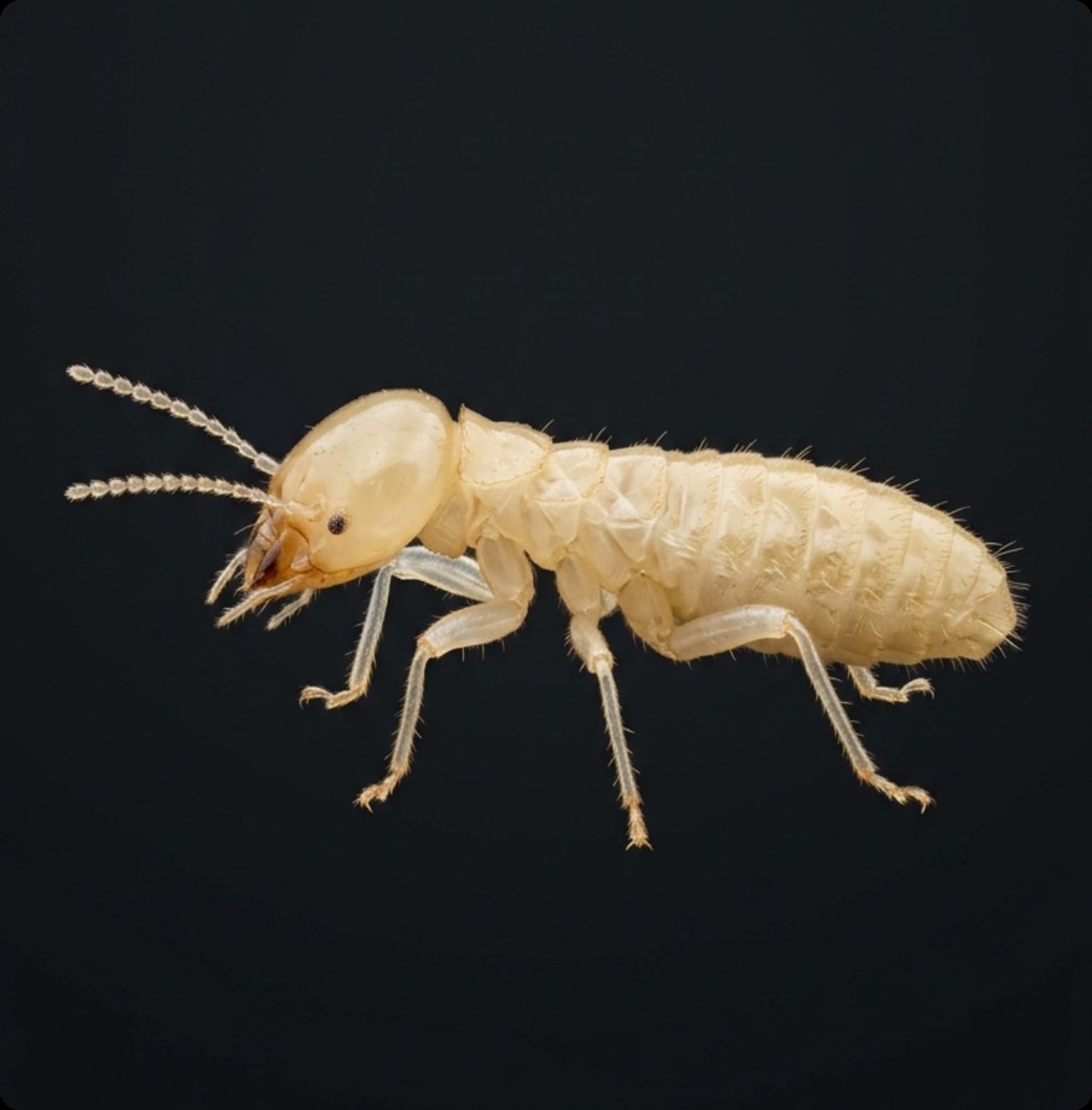
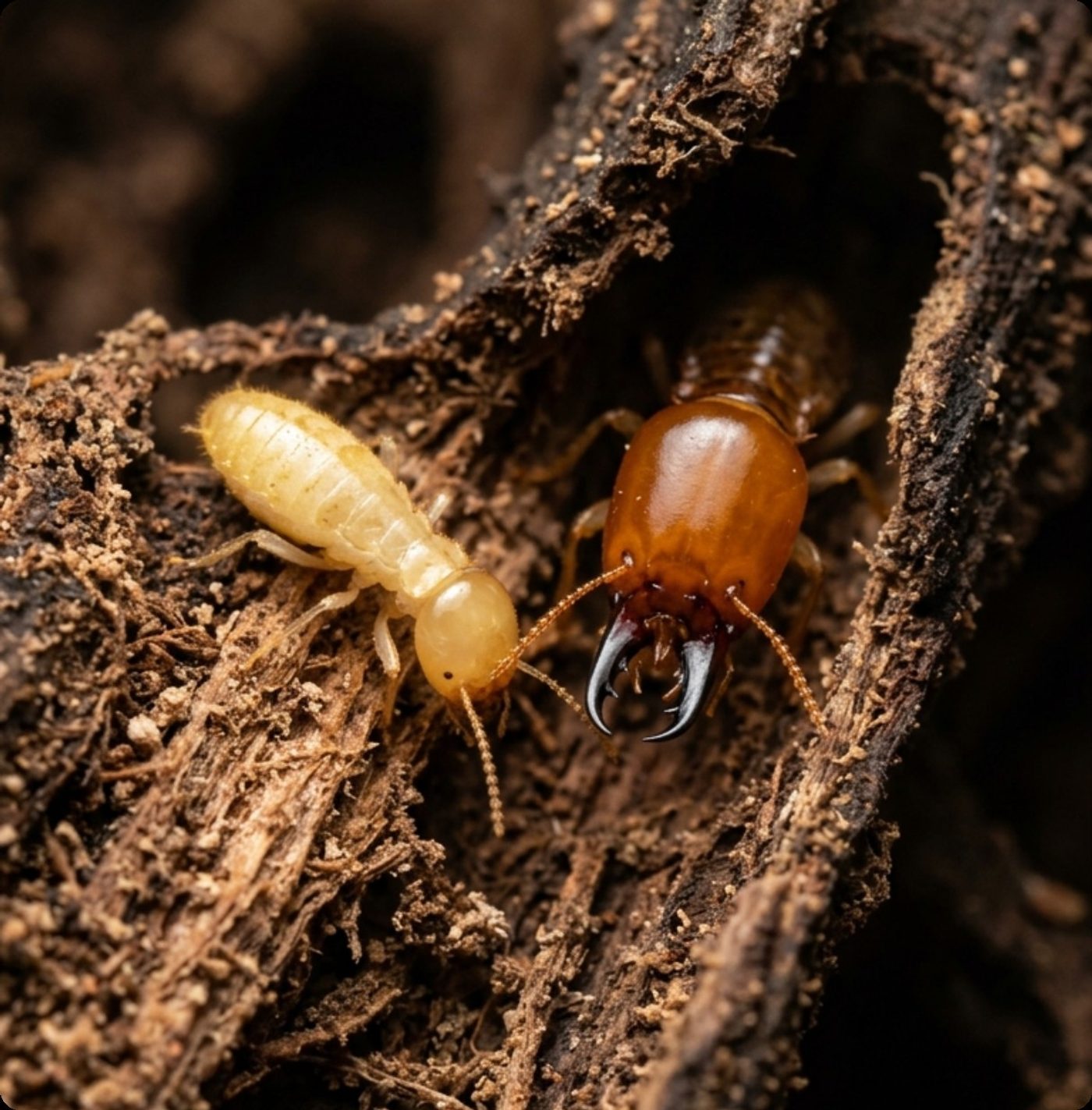
Arizona is home to three termite species, and knowing which one you're dealing with
changes everything about how we treat it.
Subterranean termites are the most common by far. They build mud tubes
from the soil to reach wood, and they're responsible for the vast majority of structural
damage in the Valley. If you see pencil-width mud lines running up your foundation, this
is likely your culprit.
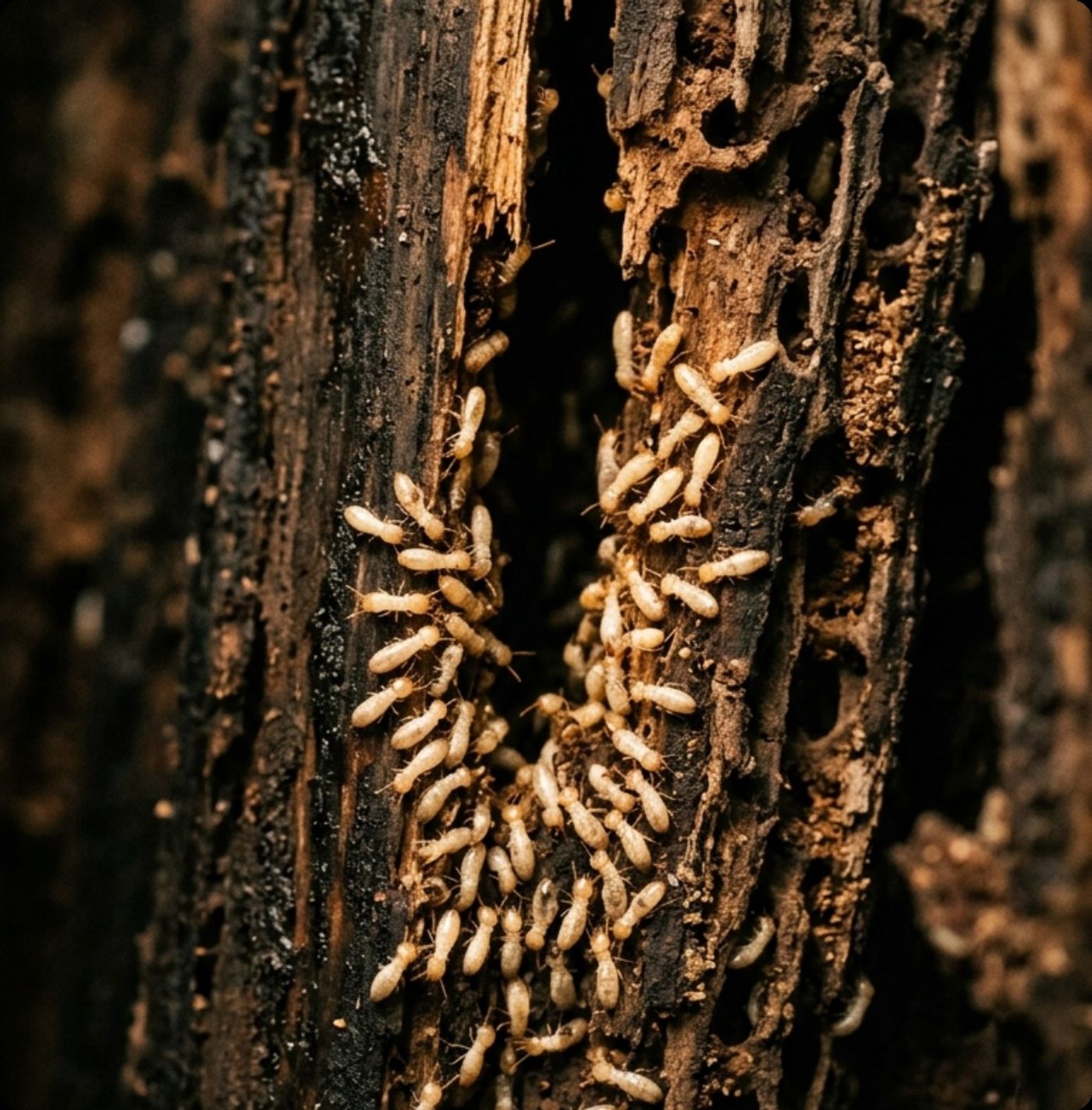
Drywood termites live entirely inside the wood they feed on - no soil
contact needed. They're sneakier because there are fewer visible signs until the damage
is well underway. Look for small piles of pellets (frass) that resemble sawdust near
window frames or door jambs.
Dampwood termites are less common in our dry climate but show up in
areas with moisture problems - leaky pipes, poor drainage, wood-to-soil contact. Fix the
moisture issue and you remove their reason for being there.
What to Watch For
Warning Signs of Termite Activity
Most homeowners don't notice termites until the damage is already done. Here's what to
watch for:
Mud tubes on foundation walls, pipes, or in crawl spaces - these are
highways for subterranean termites
Swarmers (winged termites) inside your home, especially January
through April during swarm season
Discarded wings near windows, doors, or light fixtures after a swarm
event
Hollow-sounding wood when you tap on baseboards, door frames, or
support beams
Bubbling or peeling paint that looks like water damage but has no
moisture source
Frass (drywood termite droppings) - tiny pellets that accumulate
below kick-out holes in wood
Sagging floors or tight-fitting doors that suddenly don't close
properly
If you're seeing any of these, don't sit on it. Termite damage compounds over time, and
a $500 problem today can become a $2,000+ problem six months from now.
Why It Matters
Why Termite Damage Is Serious
Termites cause more property damage annually than fires, floods, and storms combined in
the United States. They work 24/7, and a mature colony can consume several pounds of
wood per year.
The financial hit ranges from $500 for early-caught localized damage up to $2,000 or
more when colonies have been feeding undetected. The part that really stings:
homeowners insurance almost never covers termite damage. It's considered a maintenance
issue, not a sudden event.
In Arizona's climate, termites are active year-round. There's no winter freeze to slow
them down. Swarm season (January through April) is when most people first notice a
problem, but the colony has usually been established for years before that first swarm.
Catch it early and treat it properly, and the repair costs drop dramatically - and the
structure stays sound.
Commercial Service
Commercial & Industrial Termite Control
Termites don't care whether it's a family home or a commercial building. We work with
property managers, restaurant owners, warehouse operators, and HOAs across the metro.
Commercial properties bring their own challenges - larger footprints, multiple entry
points, occupied spaces that need minimal disruption, and compliance requirements. Our
crews handle all of it. We schedule around your business hours, coordinate with tenants
when needed, and provide the documentation your property management company or insurance
carrier requires.
For a single retail space or a multi-building complex, the process starts the same way:
a thorough inspection, species identification, and a treatment plan built for your
specific situation.
How We Work
Lunar Lock Protocol - Our Process
01
Full Property Inspection
We inspect the entire property, not just the spot where you noticed activity.
Termites can have multiple entry points, and treating one while missing another is
a waste of your money. We check the foundation perimeter, crawl spaces, attic
framing, plumbing penetrations, and any wood-to-soil contact points.
02
Species Identification
Different species require different treatment strategies. We identify exactly which
termite you're dealing with before we touch a single piece of equipment. This
matters because subterranean termites respond to liquid barriers while drywood
termites often need localized spot treatments.
03
Targeted Treatment
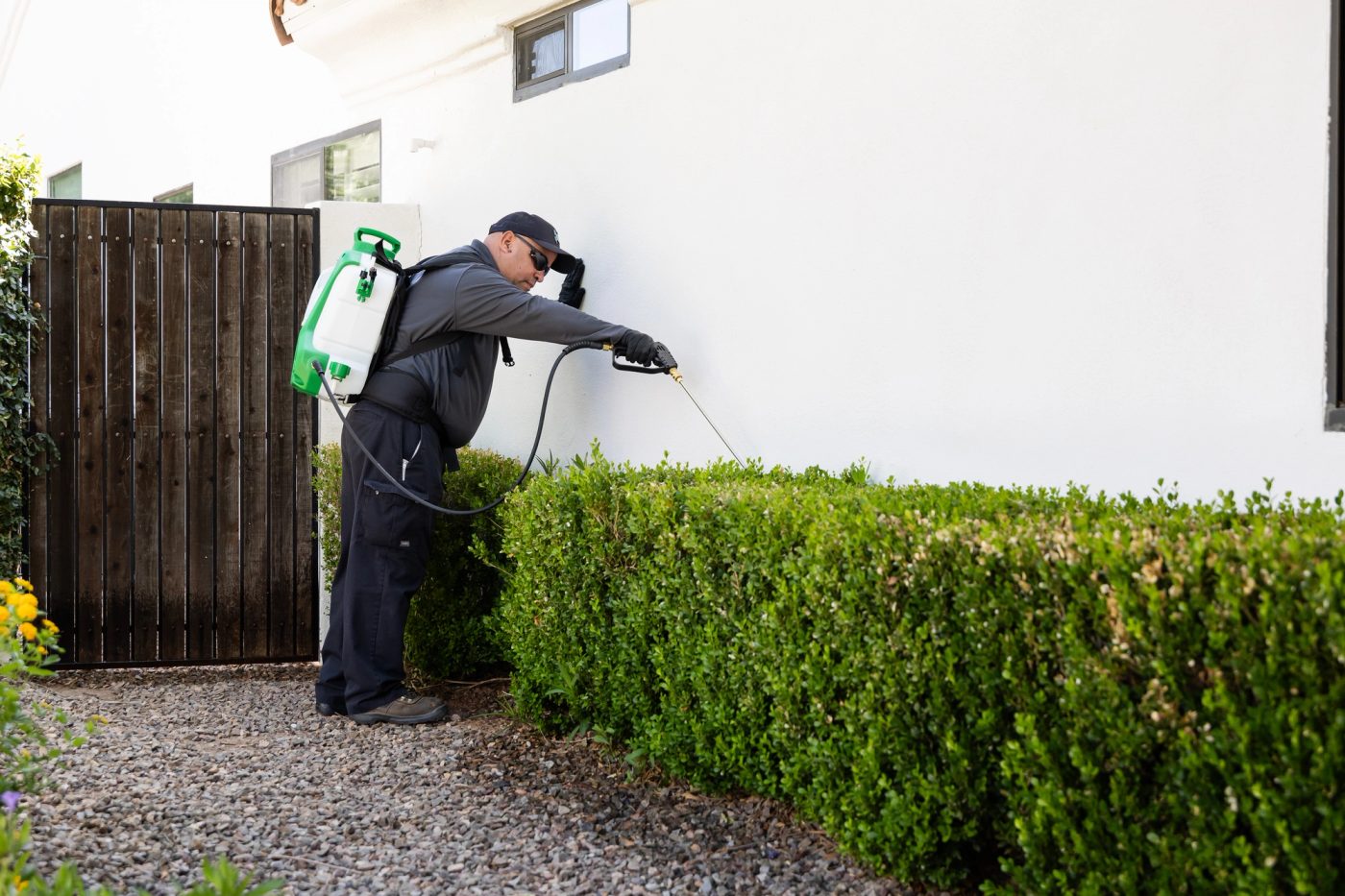
Based on the inspection and species ID, we build a treatment plan specific to your
property. For subterranean termites, this typically involves liquid barrier
treatment applied around the foundation. For drywood infestations, we use targeted
spot treatments directly into the affected wood. We don't upsell unnecessary
services.
04
Documentation and Warranty
You get a detailed report covering what we found, what we treated, and what to
watch for going forward. Every treatment comes with our warranty and our 100%
satisfaction guarantee. If you're not happy with the results, we come back and
make it right.
Why Lunar Pest
The Lunar Pest Experience
13+ Years in Arizona
We've been doing this since 2011. Our technicians know Arizona construction, Arizona
soil, and Arizona termite behavior inside and out.
Same-Day Service
Spotted something that looks like termite activity? We can usually get a crew to
your property the same day you call.
4–5 Termite Jobs Daily
This isn't a side service for us. Termite work is a core part of what our crews do
every single day across the Phoenix metro.
100% Satisfaction Guarantee
If you're not satisfied with the results, we come back. Period.
Long-Term Prevention
Protecting Your Home Long-Term
Treatment solves the immediate problem. Prevention keeps it from coming back.
Annual termite inspections - Even with an active barrier in place, an
annual check catches any new activity before it becomes a problem.
Reduce wood-to-soil contact - Keep mulch, firewood, and landscape
timbers at least 6 inches away from your foundation.
Fix moisture issues - Repair leaky faucets, AC drip lines, and
irrigation that pools near the foundation.
Seal entry points - Caulk cracks in the foundation, seal around
plumbing penetrations, and close gaps where utility lines enter the structure.
Monitor your barrier - Liquid barrier treatments last 5-10 years
when applied correctly, but soil disturbance from landscaping or construction can
create gaps.
The best pest control I've ever used. Very responsive.
A
Alejandro Martinez
Great weed and pest control. Will use again!
C
Chandler Air Service
Reliable, professional, and reasonably priced.
T
Tom Bridenback
No more scorpions. The owner is very responsive.
L
Linda Voss
Fast and friendly! Haven't seen a bug since.
J
Jacob P.
Prompt, professional, and very affordable.
D
Dana Chen
Top-notch service! Explained everything clearly and made sure I was comfortable with the treatment before starting.
M
Marcus Weller
They showed up on time, answered all my questions, and were very respectful of our home.
E
Emily Starks
Very impressed. The technician was courteous, wore shoe covers, and treated every area we discussed.
B
Ben & Sarah K.
Great experience from start to finish. Booking was easy and the follow-up was appreciated.
J
Julie Kaye
They got rid of our ants in one visit! Super impressed with how fast they worked.
R
Ralph D.
Finally, someone who knows how to handle scorpions. We've tried two other companies—Lunar is the only one that worked.
N
Natalie Frey
Quick and professional. Will definitely use again.
T
Travis L.
Fair prices and excellent service.
A
Allison Beck
So glad we switched to this company. Night and day difference. They actually follow up, explain the products, and give peace of mind.
G
Greg O.
Our tech was super knowledgeable and polite. He even showed me where the bugs were getting in!
M
Megan T.
Very thorough and detailed. Highly recommend.
L
Lori Jensen
Love the customer service and the results!
T
Trevor Mills
Fast service and no more bugs. Thanks!
I
Isabel Harmon
We had a major cricket issue in our backyard, and Lunar had it resolved within a couple visits. Very happy with the outcome!
S
Sam D.
Courteous staff, clear communication, and they didn't try to upsell anything I didn't need. Just honest work.
V
Valerie Nunez
The team at Lunar Pest Control is always on time and incredibly respectful. They listen and take care of what actually needs treating.
R
Reggie Baldwin
Haven't seen a single spider in weeks. That's saying something in Arizona. Highly recommend!
A
Angela Pierce
We've had monthly service for a year now. I never have to think about pests anymore—and I used to stress about it constantly
T
Tyrese C.
Their technology makes things easy—I love getting text reminders and updates about what was done after each visit.
W
Whitney Gray
I wasn't sure what to expect, but the technician took time to walk through everything with me and was super thorough.
K
Ken L.
Great service and even better people. Feels like a local company that really cares.
R
Rachel DeVine
Lunar Pest Control went above and beyond. They treated our attic, garage, and yard with zero hassle and explained everything clearly. Very happy we found them!
T
Travis L.
Fair prices and excellent service.
A
Allison Beck
So glad we switched to this company. Night and day difference. They actually follow up, explain the products, and give peace of mind.
G
Greg O.
Our tech was super knowledgeable and polite. He even showed me where the bugs were getting in!
M
Megan T.
Very thorough and detailed. Highly recommend.
L
Lori Jensen
Love the customer service and the results!
T
Trevor Mills
Fast service and no more bugs. Thanks!
I
Isabel Harmon
We had a major cricket issue in our backyard, and Lunar had it resolved within a couple visits. Very happy with the outcome!
S
Sam D.
Courteous staff, clear communication, and they didn't try to upsell anything I didn't need. Just honest work.
V
Valerie Nunez
The team at Lunar Pest Control is always on time and incredibly respectful. They listen and take care of what actually needs treating.
R
Reggie Baldwin
Haven't seen a single spider in weeks. That's saying something in Arizona. Highly recommend!
A
Angela Pierce
We've had monthly service for a year now. I never have to think about pests anymore—and I used to stress about it constantly
T
Tyrese C.
Their technology makes things easy—I love getting text reminders and updates about what was done after each visit.
W
Whitney Gray
I wasn't sure what to expect, but the technician took time to walk through everything with me and was super thorough.
K
Ken L.
Great service and even better people. Feels like a local company that really cares.
R
Rachel DeVine
Lunar Pest Control went above and beyond. They treated our attic, garage, and yard with zero hassle and explained everything clearly. Very happy we found them!
T
Travis L.
Fair prices and excellent service.
A
Allison Beck
So glad we switched to this company. Night and day difference. They actually follow up, explain the products, and give peace of mind.
G
Greg O.
Our tech was super knowledgeable and polite. He even showed me where the bugs were getting in!
M
Megan T.
Very thorough and detailed. Highly recommend.
L
Lori Jensen
Love the customer service and the results!
T
Trevor Mills
Fast service and no more bugs. Thanks!
I
Isabel Harmon
We had a major cricket issue in our backyard, and Lunar had it resolved within a couple visits. Very happy with the outcome!
S
Sam D.
Courteous staff, clear communication, and they didn't try to upsell anything I didn't need. Just honest work.
V
Valerie Nunez
The team at Lunar Pest Control is always on time and incredibly respectful. They listen and take care of what actually needs treating.
R
Reggie Baldwin
Haven't seen a single spider in weeks. That's saying something in Arizona. Highly recommend!
A
Angela Pierce
We've had monthly service for a year now. I never have to think about pests anymore—and I used to stress about it constantly
T
Tyrese C.
Their technology makes things easy—I love getting text reminders and updates about what was done after each visit.
W
Whitney Gray
I wasn't sure what to expect, but the technician took time to walk through everything with me and was super thorough.
K
Ken L.
Great service and even better people. Feels like a local company that really cares.
R
Rachel DeVine
Lunar Pest Control went above and beyond. They treated our attic, garage, and yard with zero hassle and explained everything clearly. Very happy we found them!
Frequently Asked Questions
How long does termite treatment take?
Most residential treatments take 2-4 hours depending on the size of your home and the
treatment method. Liquid barrier applications for an average-sized home are usually on
the shorter end. Larger properties or homes with crawl spaces may take a full half
day. We'll give you a time estimate before we start so you can plan accordingly.
How much does termite treatment cost?
Most homeowners spend between $500 and $2,000 for liquid barrier treatment. The cost
depends on your home's size, the severity of the infestation, and which termite species
we're treating. We provide a detailed quote after the inspection - no hidden fees, no
surprise charges. We also offer financing options for larger treatments.
Do I need to leave my home during treatment?
For most liquid barrier treatments, no. Our technicians apply the product around the
exterior foundation, and you can stay inside during the process. We'll let you know if
any interior treatment is needed and what that means for your schedule. There's no
tenting or fumigation involved with our liquid and spot treatment methods.
How often should I get a termite inspection?
We recommend annual inspections for all Arizona homes, even if you've never had termite
activity. Termites are active year-round here, and early detection is the single
biggest factor in keeping repair costs low. If your home has had previous termite
activity or is in a high-risk area, twice-yearly inspections are worth considering.
Will termites come back after treatment?
Liquid barrier treatments last 5-10 years when applied correctly. The barrier creates a
continuous treated zone around your foundation that eliminates termites on contact.
Reinfestations can happen if the barrier is breached from landscaping, construction, or
soil erosion, or if a new colony approaches from an untreated area. That's why we
include monitoring as part of our follow-up and recommend annual inspections.
Same Day Service Available
Protect Your Home From Termite Damage
Don't wait until the damage is visible. Call us today for a same-day inspection. We'll
identify the species, assess the damage, and give you a straight quote - no pressure, no
hidden fees.