Same Day Service Available | No Obligation Instant Quote
Fly Treatment in Arizona
Same Day Service Available
No Obligation Instant Quote

Flies are one of those pests that people tend to tolerate until they can't anymore. A few fruit flies near the kitchen is annoying. A constant swarm of house flies near a back door or a drain fly problem in a commercial kitchen is something else. Flies are also genuinely hazardous - house flies carry and transmit over 100 pathogens, including salmonella and E. coli, by landing on food surfaces and regurgitating digestive enzymes onto everything they touch.
The approach is the same whether it's a residential kitchen or a restaurant kitchen - find the breeding source, eliminate it, and treat the adults.

Same Day Service Available
No Obligation Instant Quote
Your Location
Know Your Species
Fly Species That Cause Problems in Arizona
House Flies - Females lay 500 or more eggs over their lifetime in garbage, pet waste, compost, and manure. Eggs hatch within hours in Arizona's heat, and larvae mature to adults in as few as 6 to 10 days in summer temperatures.
Fruit Flies - Small, with red eyes and tan bodies. They breed in overripe produce, spilled sugary drinks, wine residue, and drain buildup. An ongoing fruit fly problem almost always means there's a persistent breeding source inside.
Drain Flies - Look fuzzy and moth-like. They breed inside drain pipes and sewage systems where organic material accumulates. Persistent small, fuzzy flies near the drains is a drain fly problem.
Blow Flies - Have a distinctive metallic blue or green body. They breed in dead animals and rotting meat. If blow flies are suddenly appearing inside a home, there's almost certainly a dead animal somewhere.
Our Process
How Fly Treatment Works
Species Identification - Different flies require different strategies. We identify what you're dealing with before treating, because treating drain flies the same way as house flies doesn't work.
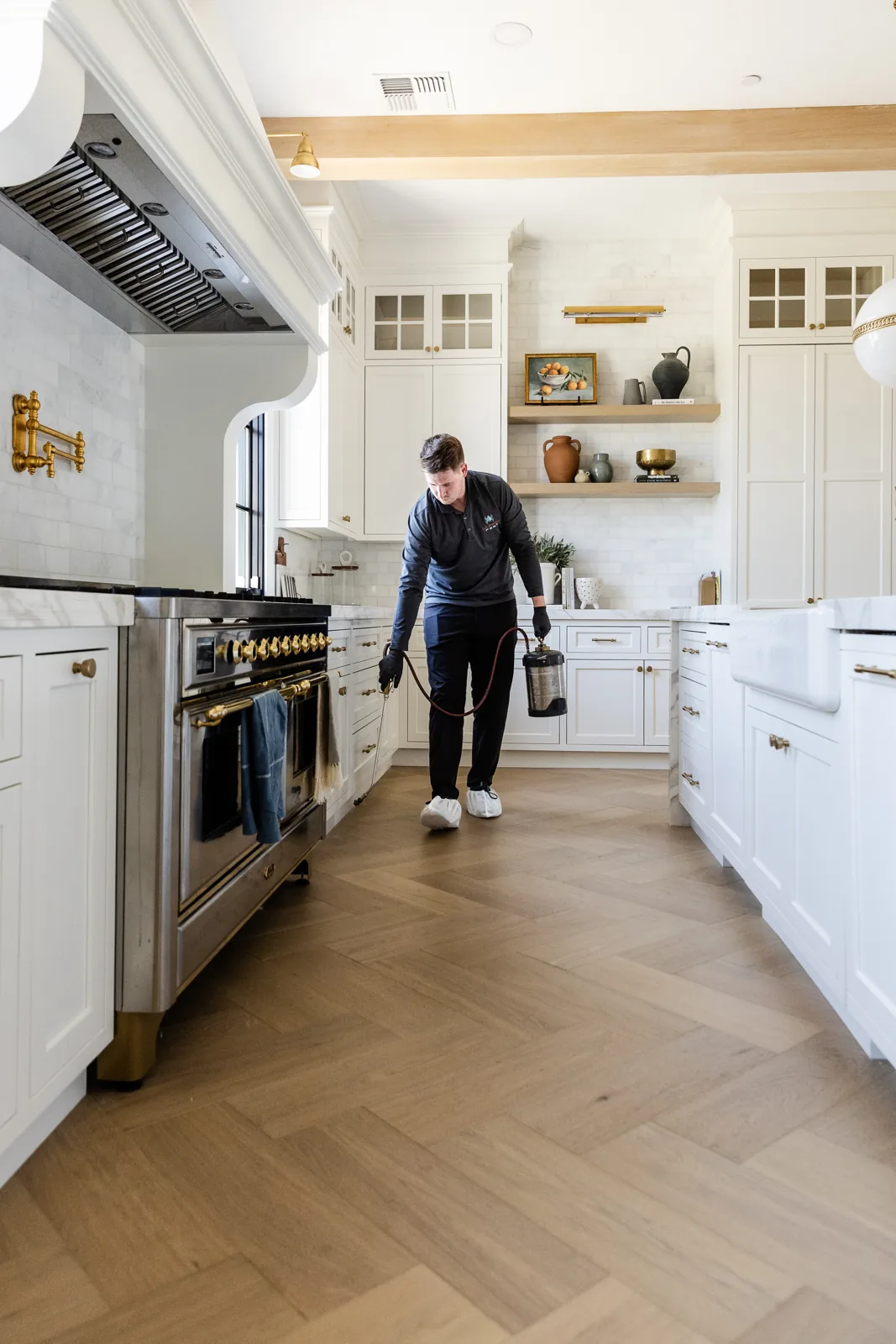
Breeding Site Treatment - Adults are what you see; breeding sites are what sustains the population. Outdoor breeding areas get treated directly. Drains with fly larvae get an enzymatic or targeted treatment that breaks down the organic buildup. Skipping this step produces short-term results only.
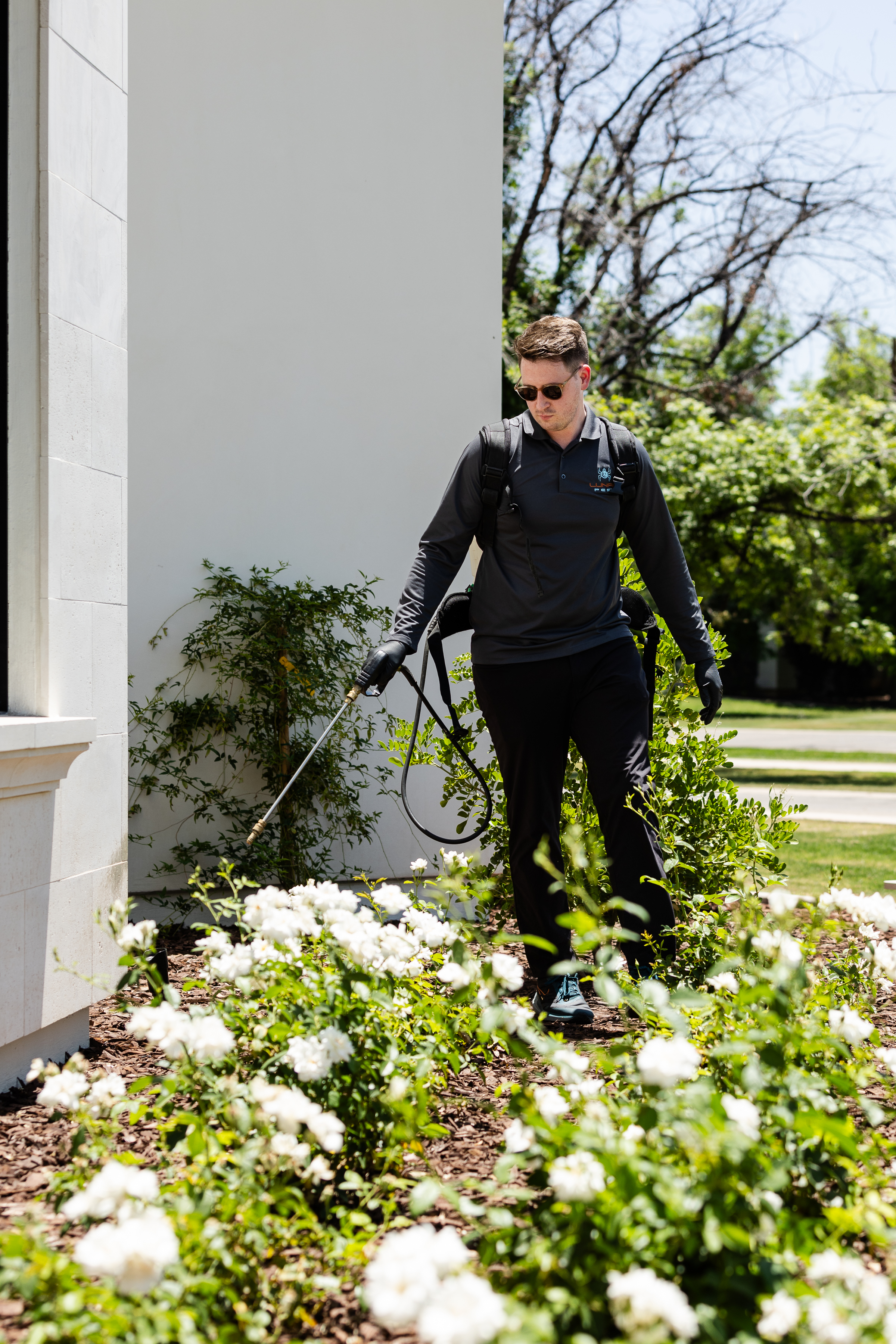
Adult Fly Knockdown - Residual products applied to eaves, exterior walls, and entry points kill adult flies landing on or near the structure. Fly traps and light traps get deployed where appropriate.
Exclusion and Sanitation Guidance - We identify the gaps, tears, and entry points that allow flies inside and walk you through the sanitation changes that will have the most impact.

Commercial Service
Commercial Fly Control
Fly problems in food service operations are regulatory issues, not just nuisances. A fly sighting during a health inspection can have serious consequences. We provide:
- Regular monitoring with installed fly trap systems
- Documentation suitable for health department inspections
- Drain treatment programs for commercial kitchen drains
- Emergency response for situations where a scheduled treatment can't wait
We work with commercial properties across all 26 cities we serve in the Phoenix metro - from small retail spaces to large commercial properties.
Same Day Service Available
No Obligation Instant Quote
What Our Customers Say
Trusted Across the Phoenix Valley
Frequently Asked Questions
A sudden increase almost always means something is breeding nearby. Check garbage cans - especially if the lids aren't sealing properly. Look for dead animals in the yard or accessible areas under the structure. Inspect drains if you're seeing small or fuzzy flies near bathrooms or the kitchen. In summer, flies can go from a few to a swarm very quickly when there's an active breeding source.
Adult fly populations decrease significantly within a few days as surface treatments take effect. Most fly problems resolve fully within 1 to 2 weeks, assuming the breeding source has been addressed. If breeding sources remain active, flies will continue to reproduce regardless of adult knockdown.
Yes. We use products and application methods appropriate for each environment. In food preparation areas, we follow all applicable food safety guidelines for product selection, application zones, and re-entry timing. We'll communicate clearly about what areas need to be kept clear during and after treatment.
Eliminating fruit flies requires finding and removing the breeding source. Remove all overripe or soft produce. Clean thoroughly under and behind appliances where spills accumulate. Clean drains with an enzymatic product. Check recycling bins for residue in cans and bottles. A bowl of overripe fruit or a half-empty bottle of wine sitting on the counter will keep a fruit fly population going indefinitely - finding that source is the key step.
Flies reproduce fast and can travel from neighboring properties. Ongoing control requires two things working together: treatment that kills adults and addresses breeding, and consistent sanitation that eliminates the attractants bringing them in. Treatment without addressing attractants is a short-term fix.
Same Day Service Available
No Obligation Instant Quote
Your Location