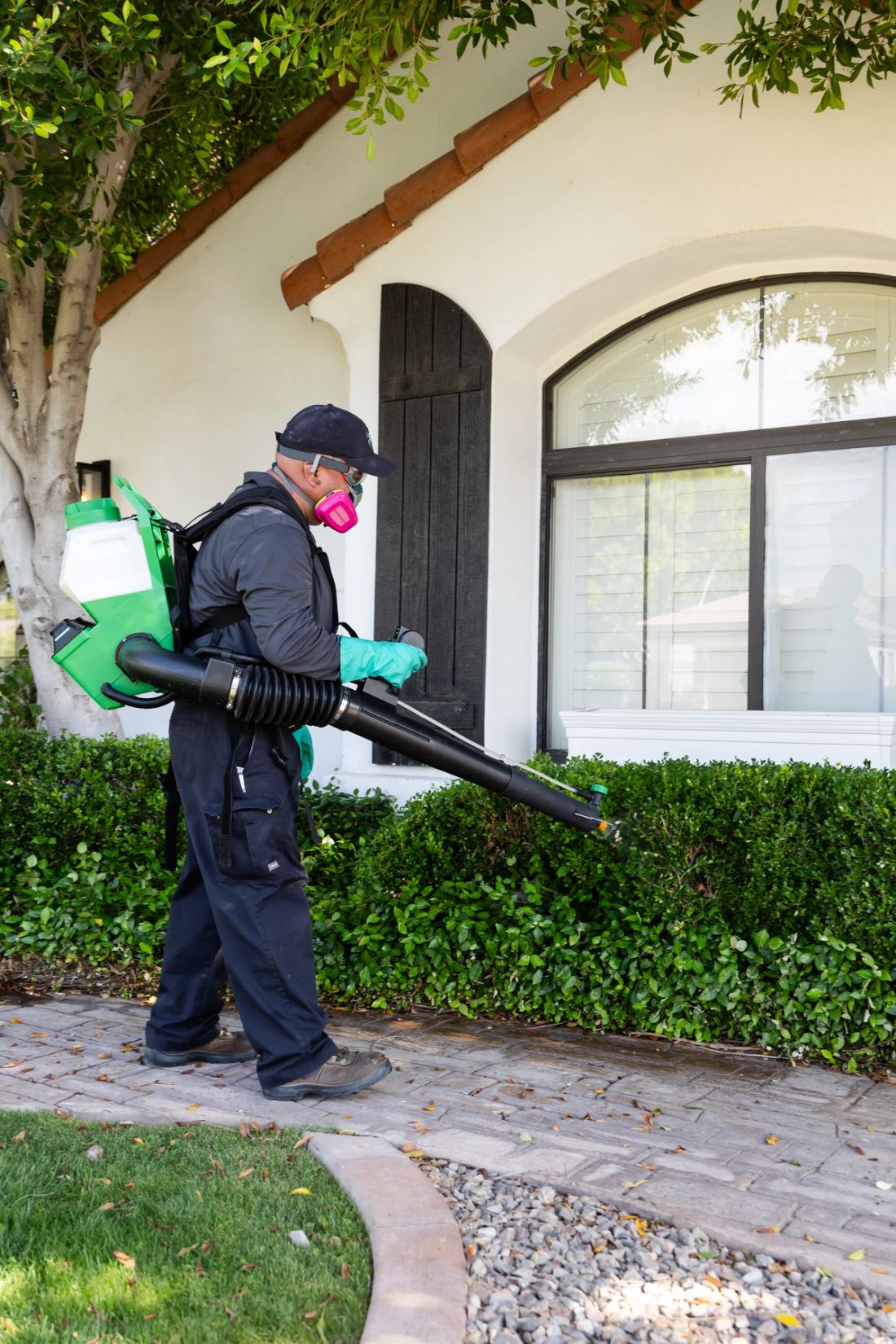
Most Common Pests in Mesa
Mesa's size and diversity of neighborhoods means the pest mix varies by area. The most consistently active pests across the city:
- Arizona bark scorpions — present citywide, with highest activity in east Mesa near desert preserves and the Superstition Mountains
- Roof rats — entrenched in older central and west Mesa neighborhoods with mature citrus trees; active year-round but most visible in fall and winter when they seek warmth
- American and German cockroaches — common in older construction and homes with mature landscaping and irrigation
- Subterranean termites — widespread in established neighborhoods, particularly in older homes and areas with prior agricultural land use
- Fire ants — active near canal corridors and irrigated properties; populations explode in spring and fall
- Black widows and brown recluse spiders — common in garages, storage spaces, and undisturbed areas
Climate and Seasonal Patterns
Mesa's desert climate creates a pest calendar that's unlike what most newcomers expect. There's no "off season" — different pests dominate at different times of year.
Spring (March–May): Scorpion activity ramps up with the first warm nights. Ants emerge in force. Termite swarmers appear after rains, which is often when homeowners first discover they have a termite problem.
Summer (June–September): Peak season across the board. Scorpions, cockroaches, mosquitoes, and wasps are all at maximum activity. Monsoon moisture drives cockroaches and rodents into structures seeking dry ground.
Fall (October–November): Roof rats become more visible as temperatures drop and they seek warmth. Pack rats begin moving closer to homes. Spider activity increases as other insect populations remain high.
Winter (December–February): Many people assume pests disappear. They don't. Bark scorpions shelter in wall voids and remain active on warm nights. Rodents that established access points in fall stay active all winter. This is when the most surprising "indoor" encounters happen.
Entry Points and Home Vulnerabilities
Mesa has a wide mix of construction eras and types, each with its characteristic vulnerabilities:
Older block wall construction (pre-1990s, common in west and central Mesa): Block construction has excellent thermal mass but develops cracks and gaps over decades. Weep holes at the base of block walls are intentional structural features — but they're the perfect size for bark scorpions to squeeze through. Plumbing penetrations that were sealed with caulk decades ago often need reinspection.
Stucco-over-wood framing (common across Mesa): Stucco is durable but can crack over time, especially on walls with west or south exposure that experience the most thermal expansion. Gaps at rooflines, around HVAC penetrations, and where additions meet original construction are common entry points.
New construction in east Mesa: Newer builds near Eastmark, Red Mountain Ranch, and Las Sendas are generally well-sealed, but their proximity to desert land creates constant wildlife pressure. Scorpions, pack rats, and occasional javelina find new development right at the edge of their territory.
Universal vulnerabilities: Garage door gaps are the most underestimated entry point in Mesa. A gap you can barely see is wide enough for a house mouse and scorpion both. Weather stripping deteriorates fast in Arizona heat — most homes need replacement every 2–3 years.
Urban Growth and Pest Pressure
Mesa is the third-largest city in Arizona and one of the larger cities by area in the entire country. Its growth pattern — decades of suburban expansion into formerly agricultural and desert land — created conditions that have intensified pest pressure over time.
The citrus orchards and agricultural fields that covered much of central Mesa before suburbanization left behind soils rich in organic matter, with existing pest populations that adapted to human development rather than disappearing. Roof rats established in the citrus belts of the 1970s and 1980s never left — their populations are now multi-generational and deeply embedded in older neighborhoods.
East Mesa's continued expansion — Eastmark, The Groves, Cadence — pushes development directly into Sonoran Desert habitat. Every new subdivision that breaks ground displaces existing scorpion, rodent, and wildlife populations. Some relocate deeper into the desert. Many relocate into the new homes.
The canal infrastructure is another factor with no parallel in most cities. The SRP canal network covers hundreds of miles across the east Valley, and Mesa sits in the middle of it. Canals maintain moisture in an otherwise arid environment, support dense vegetation corridors, and provide sheltered travel routes for rodents and other pests year-round.