Same Day Service Available | No Obligation Instant Quote
Wasp Treatment in Arizona
Same Day Service Available
No Obligation Instant Quote

Wasps are one of those pests that seem fine until they're not. One nest under your eave or tucked into a ground burrow near your back door can turn your yard into a no-go zone fast. And unlike bees, wasps can sting repeatedly - the same wasp can hit you multiple times without dying. That changes the math on DIY removal considerably.
We've been treating wasp problems across the Phoenix Valley since 2011, and we know how quickly a small nest becomes a large one in Arizona's heat. If you've found activity, the smart move is dealing with it early.
Same Day Service Available
No Obligation Instant Quote
Your Location
Common Species
Wasp Species in Arizona
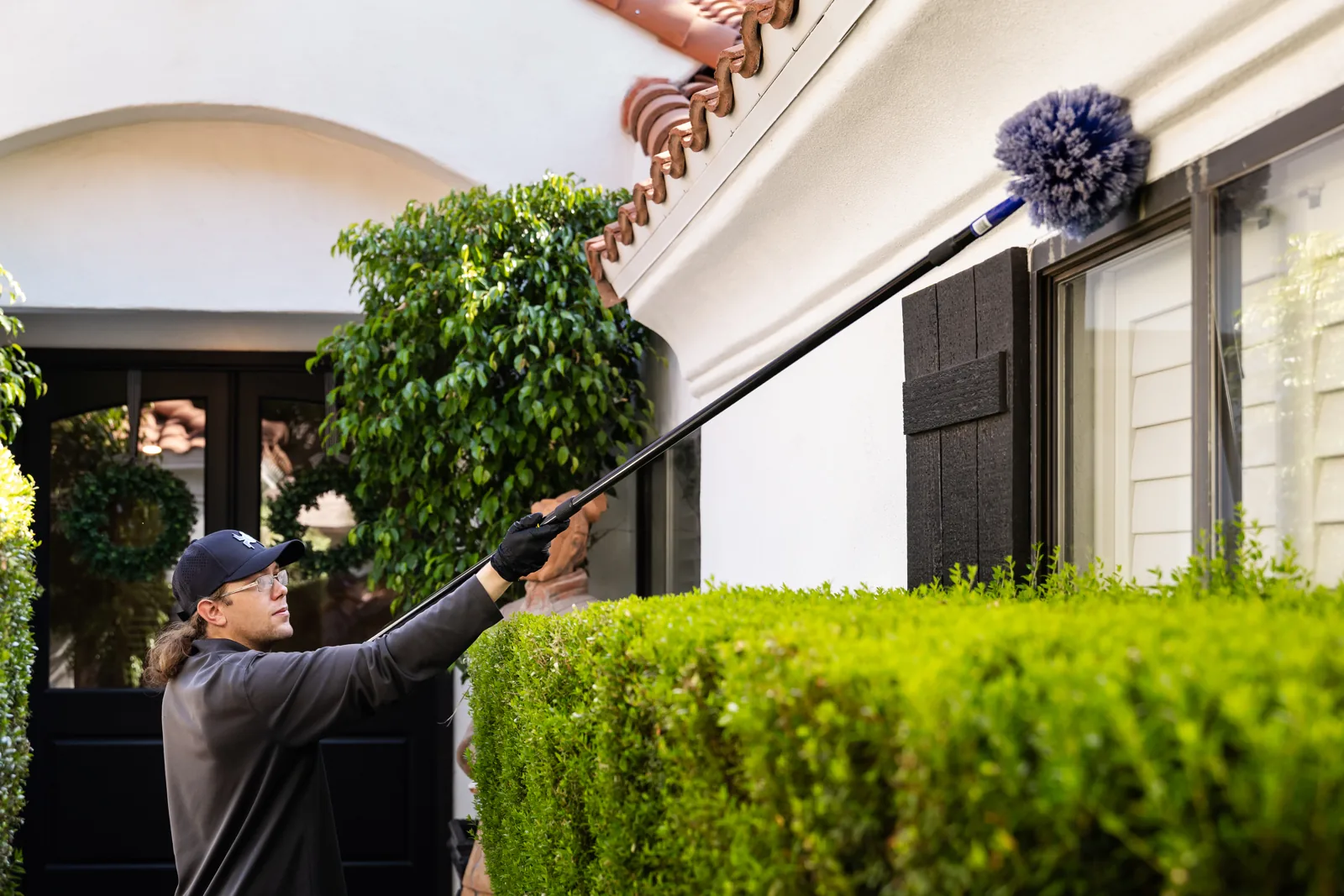
Paper Wasps - Slender with long, dangling legs and small umbrella-shaped nests. They love eaves, porch ceilings, fences, and pergolas. Paper wasps are defensive near their nest but generally not aggressive away from it. Still, a nest in a doorway arch or near a child's play area needs to go.
Yellow Jackets - Stocky, with bright yellow and black markings, they're significantly more aggressive than paper wasps and will pursue you if threatened. Yellow jackets often nest in the ground, inside wall voids, or in hollow spaces - places you might not spot until you've already disturbed them.
Mud Daubers - Solitary wasps that build tube-shaped mud nests on exterior walls, under eaves, and inside garages. They're not colony insects, so they don't swarm. They're rarely aggressive, but those mud tubes can become entry points for other pests over time and should be removed.
Early Detection
Signs of Wasp Activity
Most people find wasp nests by accident. Earlier detection is safer and cheaper. Watch for:
- A visible nest under eaves, in porch corners, or attached to fencing
- Repeated wasp flight paths entering or exiting a specific point - a gap in stucco, a weep hole, or a wood seam - suggesting a hidden nest inside
- Ground-level entry holes with wasps coming and going
- An unusual number of wasps near a specific area of your yard, even without a visible nest
- Mud tubes on exterior walls, garage ceilings, or in utility areas
Arizona's warm climate means wasp season starts earlier and runs later than in most states. By March, paper wasps are already building. By August, yellow jacket colonies can have thousands of workers.

Our Process
Our Wasp Treatment Process
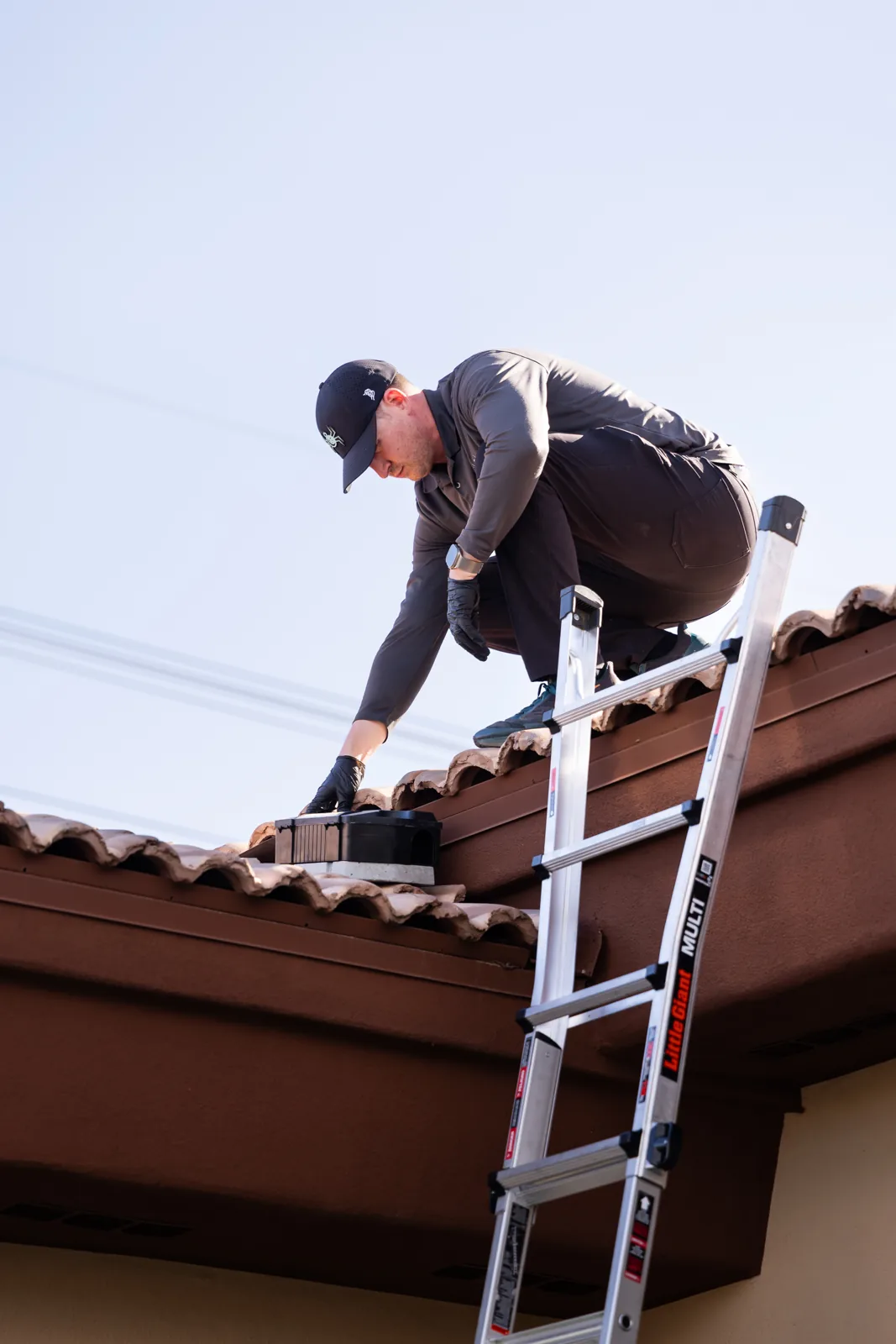
1. Nest Location. Our technicians identify all active nest sites - visible and hidden. For suspected wall voids or ground nests, we use inspection tools and look for consistent flight patterns to pinpoint the colony location before treatment begins.
2. Direct Treatment. We treat nests directly using professional-grade products appropriate for the species and location. Timing matters - morning and evening treatments are more effective because wasps are slower and more of the colony is present.
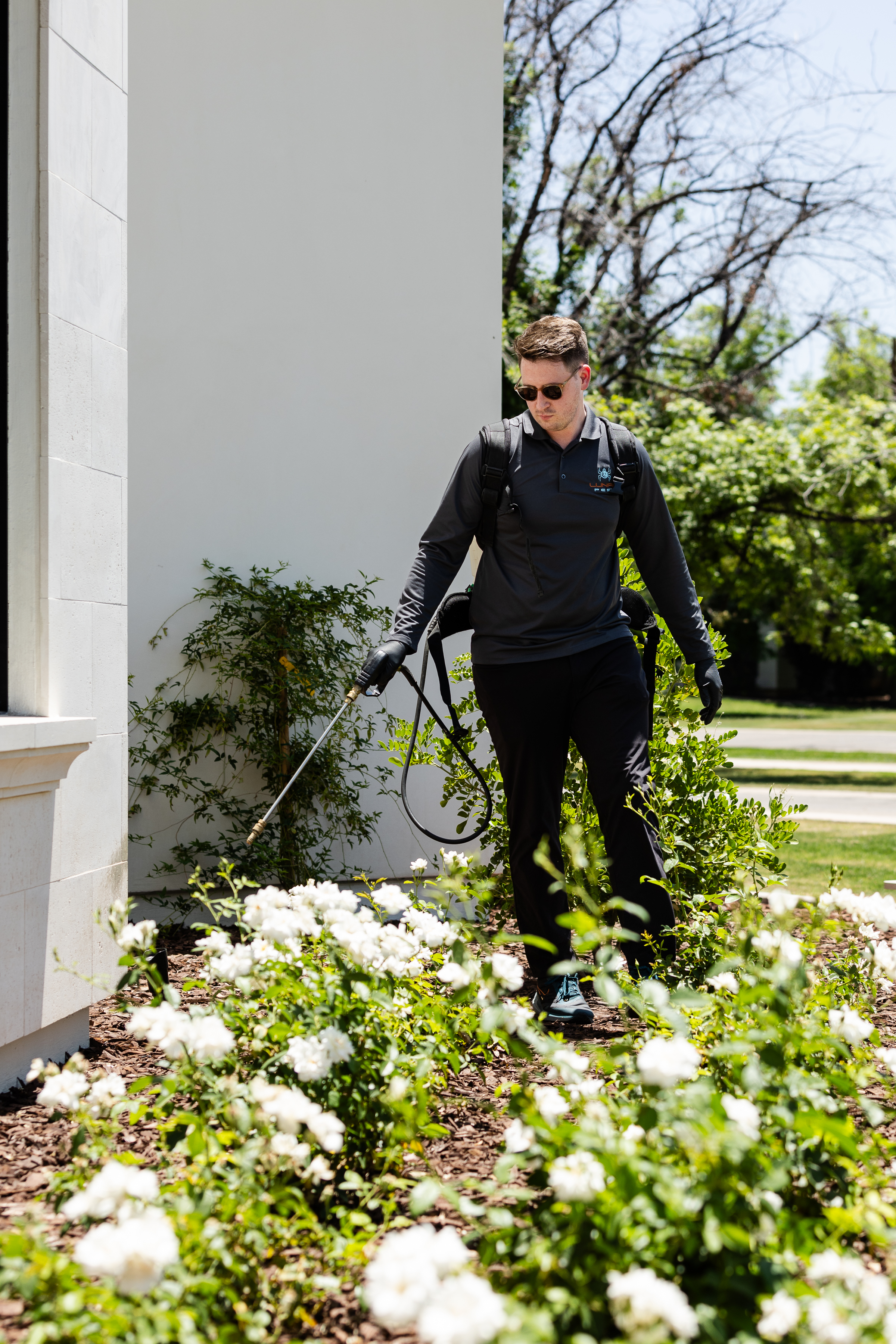
3. Preventive Treatment. After active nests are addressed, we apply residual treatments to common nesting sites - eaves, overhangs, entry gaps, and fence lines - to deter new colonies from establishing in the same spots.
4. Follow-Up and Monitoring. Wasps returning to a treated nest site are normal for a day or two. They'll die off as they contact the residual product. Our 100% satisfaction guarantee means we come back until the problem is resolved.
Same Day Service Available
No Obligation Instant Quote
What Our Customers Say
Trusted Across the Phoenix Valley
Frequently Asked Questions
Many people don't know they have a severe allergy until the first bad reaction. Signs of anaphylaxis include throat swelling, difficulty breathing, rapid heartbeat, or dizziness within minutes of a sting. If you've had a reaction beyond normal swelling and pain, talk to an allergist and carry an epinephrine auto-injector (EpiPen) when outdoors. Don't attempt wasp nest removal if you have any history of significant reactions.
For a small paper wasp nest in an accessible spot, a quality aerosol spray at dusk when wasps are sluggish can work. But yellow jacket ground nests and any nest inside a wall or structure should always get professional treatment. The volume of wasps that can mobilize from a large yellow jacket colony is serious, and disturbing a hidden nest without the right equipment and protective gear is genuinely dangerous.
Early morning or after dark. Wasps are less active when temperatures are lower and most of the colony is inside the nest. Treating a nest in the middle of the afternoon means fewer wasps contact the product initially and the ones that are out foraging return to an agitated nest later.
Some returning foragers will come back to a treated nest location for 24–48 hours, contact the residual product, and die. As long as the nest itself was treated, the colony won't re-establish. New queens can build new nests in the same general areas the following season - preventive treatment in late winter/early spring is the best way to stop that.
Same-day service is available across our service area. For ground nests near doorways, playgrounds, or anywhere with high foot traffic, don't wait - call us and we'll get there.
Same Day Service Available
No Obligation Instant Quote
Your Location